Before you drink from a new copper bottle, wash it with lemon and salt (or tamarind), rinse it thoroughly, and let it air-dry upside down — then do it once more. This two-wash “seasoning” removes factory residue, settles the sharp metallic taste that new copper has, and gets the bottle ready for its real job: holding plain water for 6–8 hours, ideally overnight. Here is the full first-use routine, what to avoid, and how to keep it clean week to week.
Why does a new copper bottle need seasoning?
Copper bottles leave the workshop bright and freshly polished, which means two things. First, there may be traces of polishing compound, lacquer dust or handling oils on the surface. Second, new copper is highly reactive — the surface has not yet formed the thin, stable oxide layer that a used bottle has — so the first few fills can taste noticeably metallic. Washing with a mild acid (lemon or tamarind) and salt cleans off the residue and evens out the surface, and a few days of normal use finishes the job.
If your bottle is lacquered on the outside — most decorative, printed or painted bottles are — the lacquer protects the outer finish and you should be gentle with it. Seasoning is mainly about the inside, which is bare copper on every genuine bottle.
How do I wash and season a copper bottle for the first time?
What you need
- One lemon (or 2 tbsp lemon juice), or a small ball of tamarind soaked in warm water
- 2 tsp salt
- Warm water, a soft cloth and a bottle brush with soft bristles
- White vinegar, diluted half-and-half with water, as an alternative to lemon
Steps
- Outside first. Cut the lemon, dip it in salt and rub the outside of the bottle in circles. On a painted or lacquered bottle, skip the salt and just wipe with a damp cloth.
- Inside wash. Add 1 tbsp lemon juice (or the tamarind paste, or the diluted vinegar), 1 tsp salt and a cup of warm water. Close the lid and shake for 30 seconds.
- Let it sit for 10–15 minutes so the acid works on the whole inner surface.
- Scrub gently with the soft brush, reaching the base and shoulder.
- Rinse thoroughly — at least four or five changes of clean water — until there is no sourness or salt on the lip.
- Air-dry upside down on a rack or clean cloth, lid off, until fully dry inside.
- Repeat once. A second wash the same day or the next is what makes the difference for the metallic taste.
After seasoning, fill it with plain water, leave it overnight, and pour that first fill away in the morning. From the second fill onwards it is ready to drink.
Why does copper water taste metallic at first — and will it stop?
A very faint mineral taste is part of copper water; that is the small amount of copper the water picks up, which is the whole idea behind the practice. A strong or sharp metallic taste in a new bottle is different — it comes from fresh, unseasoned copper and occasionally from residue. Two washes and a week of normal daily use resolve it in almost every case. If the sharp taste persists after that, wash again with tamarind and make sure you are not leaving water in the bottle for more than a day at a time. Ayurveda holds that water stored in copper has a balancing effect; we keep the wellness claims modest and explain them in our copper water bottle benefits guide.
How long should water be stored in a copper bottle?
The traditional practice — and the one we recommend — is 6–8 hours, most commonly overnight. Fill the bottle in the evening, drink the water in the morning, rinse with plain water and refill. Do not top up an old fill or leave the same water for two or three days; longer storage increases how much copper leaches into the water without adding any benefit. Room-temperature water is ideal. If you want cold water, chill a glass afterwards rather than refrigerating the copper bottle.
| Do | Avoid |
|---|---|
| Plain, room-temperature water | Hot or boiling water |
| 6–8 hours, or overnight | Leaving water for days |
| Rinse and refill each morning | Topping up an old fill |
| Drink 1–2 glasses a day | Drinking only copper water all day |
| Weekly lemon or tamarind clean | Dishwasher, steel wool, bleach |
Moderation matters. A copper bottle is meant for a glass or two of stored water each morning, not for every sip through the day. Our honest guide to copper water side effects and safe daily limits sets out who should be careful and why.
What should never go into a copper bottle?
Copper reacts with acids and with heat. Anything other than plain water risks pulling too much copper into the drink, staining the inside, or leaving a smell that is hard to remove.
- Citrus juices and lemon water — the acid reacts fast with copper.
- Milk, buttermilk, lassi and curd-based drinks — they spoil in copper and react with it.
- Tea, coffee and hot liquids — heat speeds up leaching and can loosen lacquer.
- Carbonated or fermented drinks — acidic, and the pressure is a problem in a sealed bottle.
- Honey, syrups or anything sugary — sticky residue is nearly impossible to clean out fully.
What is a good weekly cleaning routine for copper?
Daily: empty, rinse with plain water, and stand upside down to dry — never store it wet or closed while damp. Weekly (or every two weeks with lighter use): a lemon-and-salt or tamarind clean inside, and a gentle wipe of the outside — plain cloth on lacquered or painted bottles, lemon and salt on bare hammered copper. Rinse well and dry. The detailed methods, including vinegar for stubborn tarnish, are in our guide to cleaning a copper bottle naturally.
Avoid the dishwasher, metal scrubbers, bleach and strong detergents. They pit and scratch the metal and strip decorative finishes. A soft bottle brush is the only tool you need.
When is darkening normal — and when is it a problem?
Bare copper darkens with use; this is patina, and it is expected. A soft brown or dull tone on the outside of a plain bottle, or slight dulling inside, is normal and cosmetic. Clean it when you like the look less. What is not normal: green or blue-green deposits inside the bottle (usually from storing acidic drinks or leaving water for days — scrub with lemon and salt and rinse thoroughly), or a persistent bad smell (wash with tamarind, air-dry in sunlight for an hour). Lacquered bottles keep their outer colour for years; the lacquer eventually wears at the base and neck, which is fine — it is only the inside that touches your water.
Which copper bottle should I buy — and does the finish matter for seasoning?
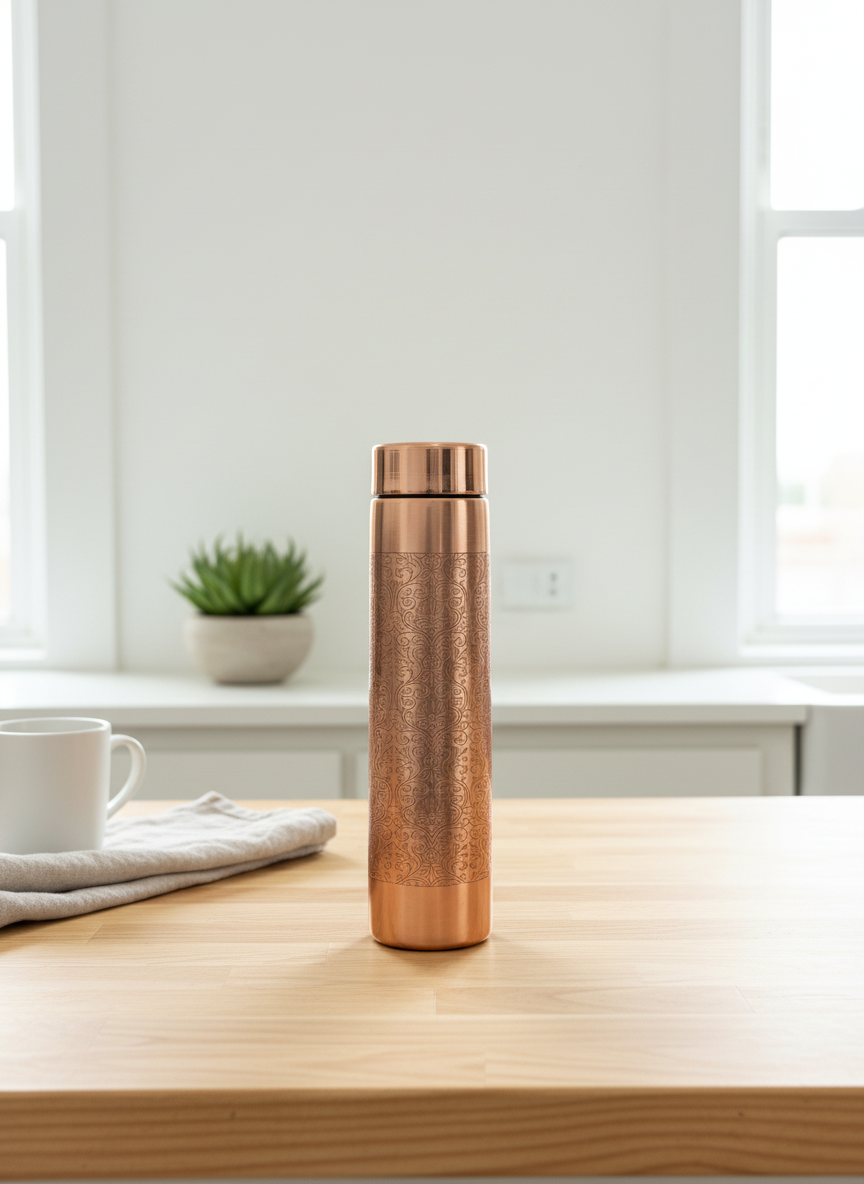
Every umsang bottle is pure copper inside, so the seasoning routine above is the same for all of them; the outer finish just changes how you clean the exterior. Plain or engraved bottles — the Handcrafted Engraved Copper Water Bottle with Floral Pattern (₹1,250, 1,000 ml) or the Vintage Antique Finish Laser Etched Pure Copper Water Bottle (₹1,499, 950 ml) — can take a lemon-and-salt rub on the outside. Painted or printed bottles, such as the Handcrafted Mandala Print Black Copper Bottle (₹1,299, 1 litre) and the Hand-Painted Floral Pure Copper Water Bottle (₹1,850), should be wiped with a damp cloth outside and cleaned normally inside. Browse the full range in our copper water bottles collection or shop all copper bottles. Orders above ₹5,000 ship free; below that shipping is a flat ₹99, and Cash on Delivery is available. Delivery takes 3–5 business days to metros and 5–7 elsewhere.
Frequently Asked Questions
Do I need to wash a new copper bottle before using it?
Yes. Rub the inside and outside with lemon juice and salt (or tamarind paste), fill it with warm water and a spoon of lemon juice, shake, let it sit 10–15 minutes, then rinse several times and air-dry upside down. Repeat once. This removes factory residue and polishing compound and settles the metallic taste.
Why does my new copper bottle smell or taste metallic?
Fresh, bright copper releases a little more copper into water than a bottle that has been used for a while, and there may be traces of polishing compound from manufacturing. Two lemon-and-salt washes and a few days of normal use usually settle it. A faint mineral taste afterwards is normal for copper.
How long should water sit in a copper bottle?
The traditional practice is 6–8 hours, most commonly overnight, then drinking it in the morning. Do not leave the same water for days. Fill fresh each evening and rinse the bottle with plain water every morning.
What should I not put in a copper bottle?
Citrus juices, lemon water, buttermilk, milk, tea, coffee, hot liquids, carbonated drinks and anything acidic or fermented. Acids react with copper and pull too much of it into the drink. Plain room-temperature water only.
How often should I clean a copper bottle?
Rinse with plain water daily and let it air-dry. Give it a lemon-and-salt or tamarind clean inside and out once a week if you use it daily, or whenever it looks dull. A gentle darkening of the outside between cleans is normal patina, not a fault.
The umsang Studio
Handcrafted home decor, made by Indian artisans.