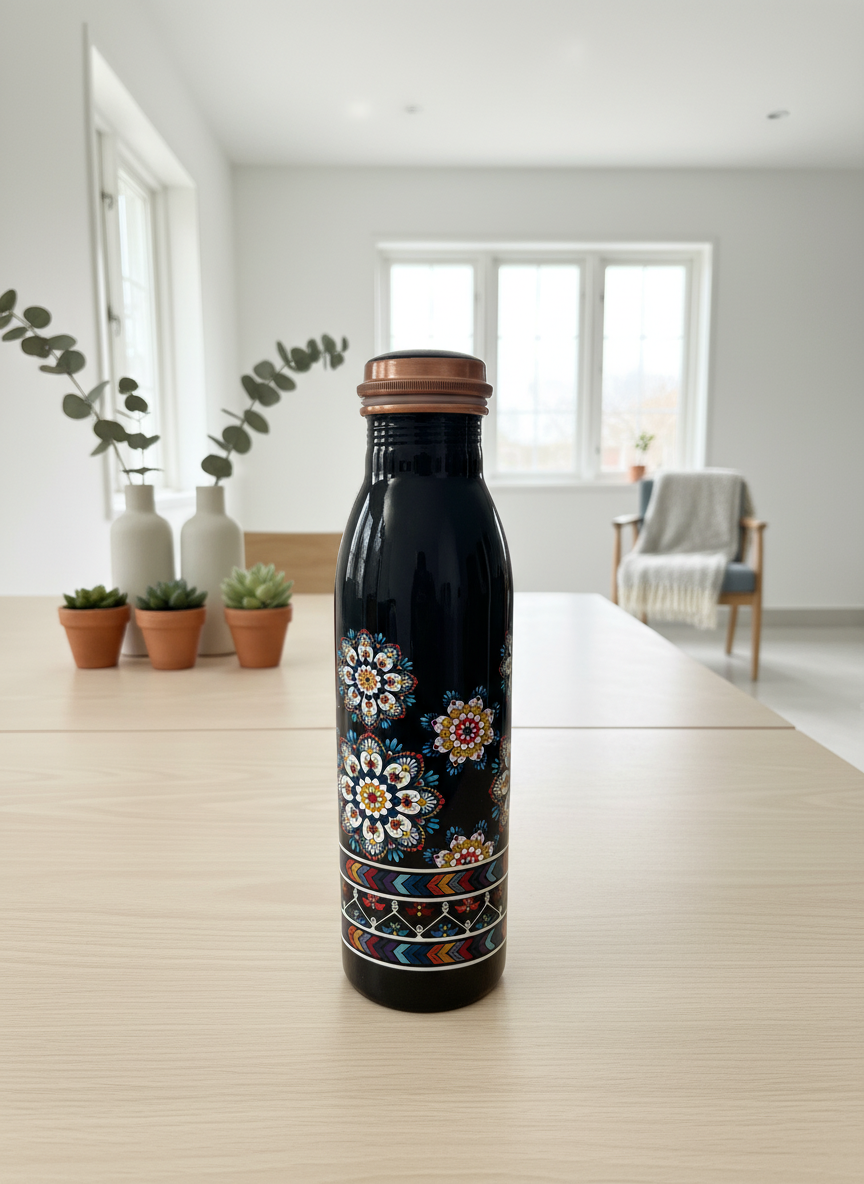
Storing water in copper vessels is one of the oldest health practices in the Indian subcontinent — Ayurvedic texts describe it as tamra jal, copper-charged water, and prescribe it for everything from digestion to immunity. In the last decade it's also caught on globally, with copper water bottles becoming a wellness staple in homes and gyms. Here's what's actually true about the practice, what's overstated, and how to use a copper bottle the right way.
The science (what's actually proven)
Copper has well-documented antimicrobial properties. Studies have shown that water stored in copper for 16+ hours significantly reduces certain bacterial loads, including E. coli and Salmonella. The World Health Organisation has recognised copper surfaces as effective against a range of pathogens — which is why hospitals are increasingly using copper for high-touch surfaces.
Copper is also an essential trace mineral the body needs for iron absorption, immune function, and nervous system health. Most adults get enough through diet, but small amounts dissolved into drinking water from a copper vessel contribute to daily intake.
What's not well-supported by modern science: claims that copper water "balances doshas," "purifies blood," or "cures arthritis." These are Ayurvedic concepts and may have value within that framework, but they aren't claims you'll find in peer-reviewed research.
How to use a copper bottle correctly
The benefit comes from contact time — water needs to sit in copper for several hours, ideally overnight, for the antimicrobial effect to take place. Filling and immediately drinking gives almost no benefit beyond what regular water provides.
The right routine:
- Fill your copper bottle with filtered or clean drinking water in the evening.
- Keep it covered, at room temperature (not refrigerated — cold reduces the reaction).
- Drink it first thing in the morning, on an empty stomach if possible.
- Aim for one to two glasses (250-500ml) per day. More is not better.
What not to do:
- Don't store acidic liquids in copper — citrus juices, lemonade, soda. Acid reacts with copper and you can ingest harmful amounts.
- Don't drink only copper water all day. The body needs balanced mineral intake; excess copper over time can cause nausea or worse.
- Don't store water for more than 8-12 hours per fill. Once a day is the sweet spot.
- Don't refrigerate the copper bottle — temperature affects the leaching process.
How to clean and maintain a copper bottle
Copper that's used daily for water will develop a green or dark patina inside. This is oxidation — it happens to all copper. You don't drink the patina (it stays on the inside surface), but it does need to be cleaned off periodically because heavy patina interferes with the water-charging process.
Daily rinse
Rinse with warm water after every use. No soap. Don't store water in a wet bottle — empty it, rinse, and let it air-dry upside down before refilling.
Weekly clean (the lemon and salt method)
Once a week, the inside needs a real clean. Cut a lemon, add a teaspoon of salt to the cut side, and rub it inside the bottle (use a long-handled brush to reach the bottom). Then add a few teaspoons of salt and the juice of half a lemon, swirl vigorously for a minute, rinse thoroughly with warm water. The inside should look noticeably brighter.
Outside care
The outside develops patina too — many people leave it because it looks beautiful, others polish it back to shine. To polish, use the same lemon-salt method on the outside, or a commercial copper polish. To preserve the patina, just dust regularly and avoid harsh chemicals.
Choosing a quality copper bottle
Not all copper bottles are equal. What to look for:
- Pure copper, not copper-plated. A magnet should not stick. Cheap "copper" bottles are often steel with a copper coating — these don't deliver any antimicrobial benefit.
- No interior lacquer. Some manufacturers coat the inside to "prevent tarnish" — this defeats the entire purpose. The water needs to touch raw copper.
- Hand-finished or hammered. Hammered copper has slightly more surface area, which means better contact and slightly enhanced effect. It also ages more beautifully.
- Sealed seam or seamless construction. Avoid bottles with visible glue or low-quality solder at the joins.
We hand-pick our copper bottles from artisans in Moradabad and the Indo-Gangetic plain — pure copper, no coating, traditional hammered finish.
Who shouldn't drink copper water
Copper water is generally safe for most adults in the recommended quantities, but there are exceptions:
- People with Wilson's disease (genetic copper accumulation disorder) — strictly avoid.
- Pregnant women — consult a doctor before adding copper water to your routine.
- Children under 5 — small bodies need much less copper; not recommended without medical guidance.
- Anyone on copper supplements — check with your physician to avoid excessive intake.
The takeaway
A copper water bottle isn't a miracle, but it is a meaningful daily ritual backed by both ancient practice and modern science. Use one bottle, drink one to two glasses of overnight-stored water in the morning, clean it weekly with lemon and salt — that's the entire practice. Done consistently, it's one of the simplest ways to honour a centuries-old wellness tradition while gaining genuine antimicrobial and mineral benefits.
The umsang Studio
Handcrafted home decor, made by Indian artisans.