Diwali 2026 is on Sunday, 8 November, with Dhanteras on Friday, 6 November. The simplest way to decorate a whole home is to work room by room with three repeating elements — brass, a floating-flower urli and layered lamplight — so the house feels like one warm idea rather than five competing ones. Below is a room-by-room plan, a clay vs brass vs ceramic diya comparison, and a timeline that has everything at your door before Dhanteras.
Pick a palette before you buy a single thing. The combination that photographs beautifully and never dates is warm metal (brass, copper) with one deep colour (indigo, emerald, oxblood) and living colour from marigolds and rose petals. Then let light do the rest: dozens of small flames at different heights beat one bright ceiling light every time. If you keep the metal consistent — brass everywhere, rather than a mix of gold-painted plastic and steel — even inexpensive clay diyas start to look considered.
How do I decorate the entrance for Diwali?
The doorway is where Lakshmi is welcomed, so it earns the most attention. Start with a rangoli on the threshold — coloured powder, flower petals or a simple rice-paste kolam — and place brass diyas at its corners. A brass lamp catches the rangoli colours in a way clay cannot, and it will not tip over in a draught. Flank the door with two matching lamps: a pair of brass oil lamps such as the Handcrafted 10-Wick Brass Diya (₹399 each) gives a temple-like symmetry for under ₹800.
- Torans of fresh marigold and mango leaves over the door frame.
- A brass urli or wide bowl of water and petals just inside the door, with two floating tealights.
- Diyas placed in odd numbers — 3, 5 or 7 — which read as more natural than even rows.
- Keep the actual walkway clear: lamps to the sides, never in the path of guests in saris.
How do I style the living room with brass and light?
The living room is where your brass urli becomes the centrepiece. Fill it two-thirds with water, float marigold heads or rose petals, and as evening comes add two to four floating tealights. The Elegant Lotus Shaped Brass Urli Bowl (₹999) suits a coffee table; the Handcrafted Traditional Brass Urli with Elephant Figurines (₹3,499) or the larger Royal Elephant Brass Urli Centerpiece (₹5,499) anchors a console or the floor beside a sofa. Browse the full range in brass home decor.
Layer the diya heights
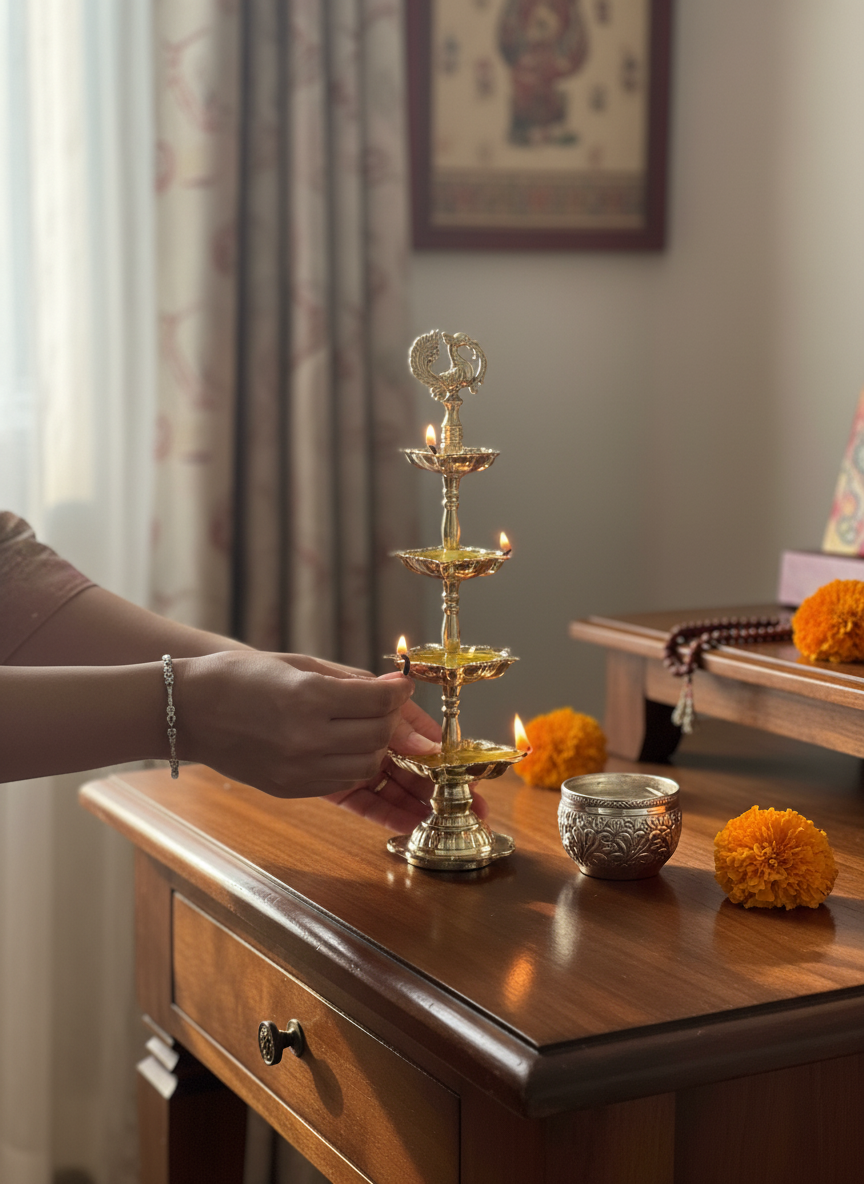
The trick professionals use is height. Put tall lamps at the back, mid-height holders in the middle and low diyas at the front, so the eye moves through the light rather than reading one flat line. A tiered lamp like the 4-Tier Traditional Brass Peacock Oil Lamp (₹2,499) does this on its own. Around it, a brass and amber glass hurricane holder protects a flame from ceiling-fan draughts and throws a honeyed glow onto the wall behind — useful in apartments where you cannot switch the fan off.
Swap, do not add
Clear the everyday clutter from shelves and coffee tables first. One brass figurine, one urli and a scatter of diyas look festive; the same pieces squeezed between remote controls and magazines look like clutter with candles.
What belongs in the pooja corner on Diwali night?
Lakshmi Puja is the heart of the evening, so keep the mandir simple and bright. A multi-wick brass lamp is traditional here because it burns steadily through the aarti: the Handcrafted Brass 8-Wick Lotus Oil Lamp (₹349) is a well-priced choice. Add fresh flowers, a small bowl of water, and lay out sweets and dry fruit on a brass thali or decorative plate. If your mandir is small, read our guide to pooja room direction and placement before you rearrange. See everything for the space in pooja room essentials.
How do I set the Diwali dining table with ceramic and brass?
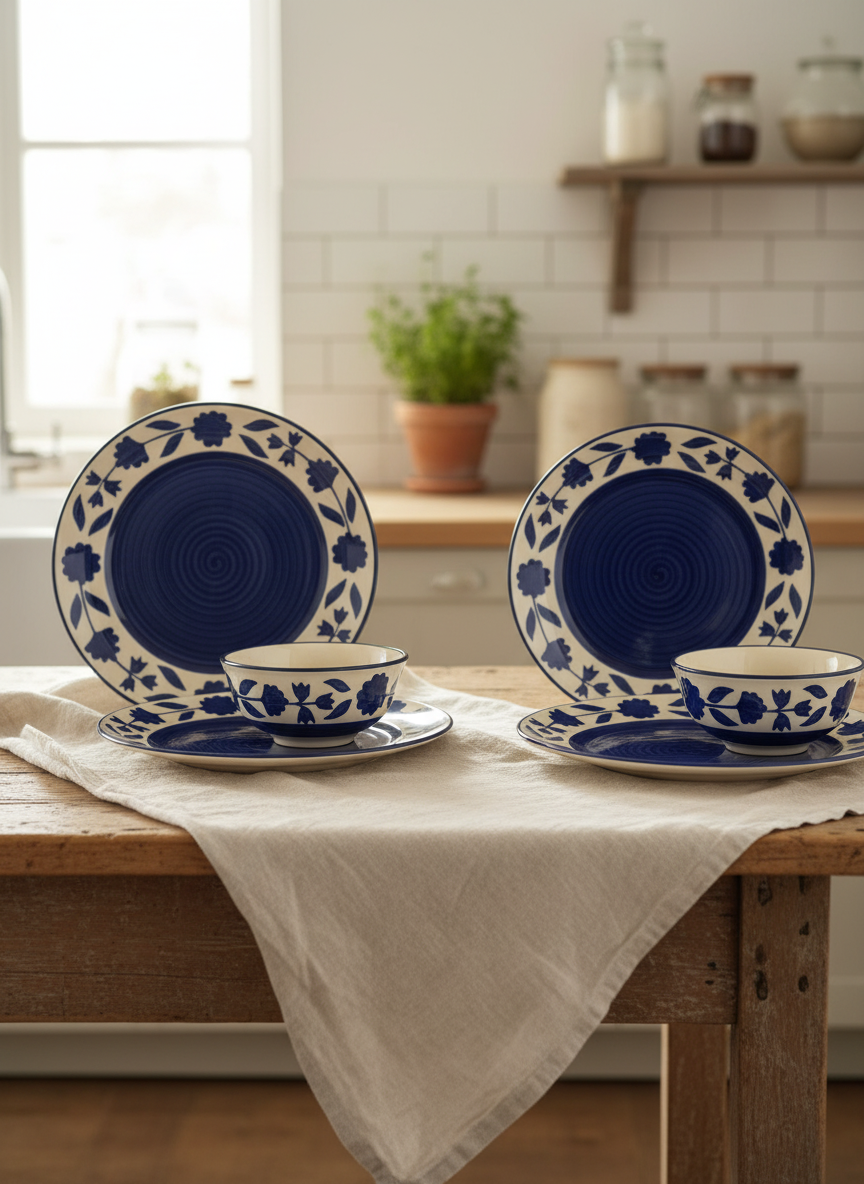
Diwali dinners are where handcrafted ceramic earns its keep. Deep-coloured plates make sweets and festive food look richer, and the contrast of glazed ceramic against brass is the easiest sophisticated table there is. A hand-painted set like the Midnight Bloom Hand-Painted Ceramic Dinner Set (₹2,250 for 3 pieces) or the Azure Bloom Artisan Ceramic Dinner Set (₹4,200 for 6 pieces) pairs naturally with a brass urli of petals as the runner centrepiece and a line of small diyas down the middle. Serve chai afterwards in hand-painted terracotta kulhads (a set of 6 is ₹850) for a touch of the mela. Explore dinner sets and tea and coffee cups.
- Runner of petals down the centre, with three to five diyas spaced along it.
- One brass piece at the centre — an urli or a Meenakari decorative plate (₹1,599) holding mithai.
- Keep flames away from where hands reach; tealights in glass holders are the safe choice near food.
What works on a balcony or windowsill?
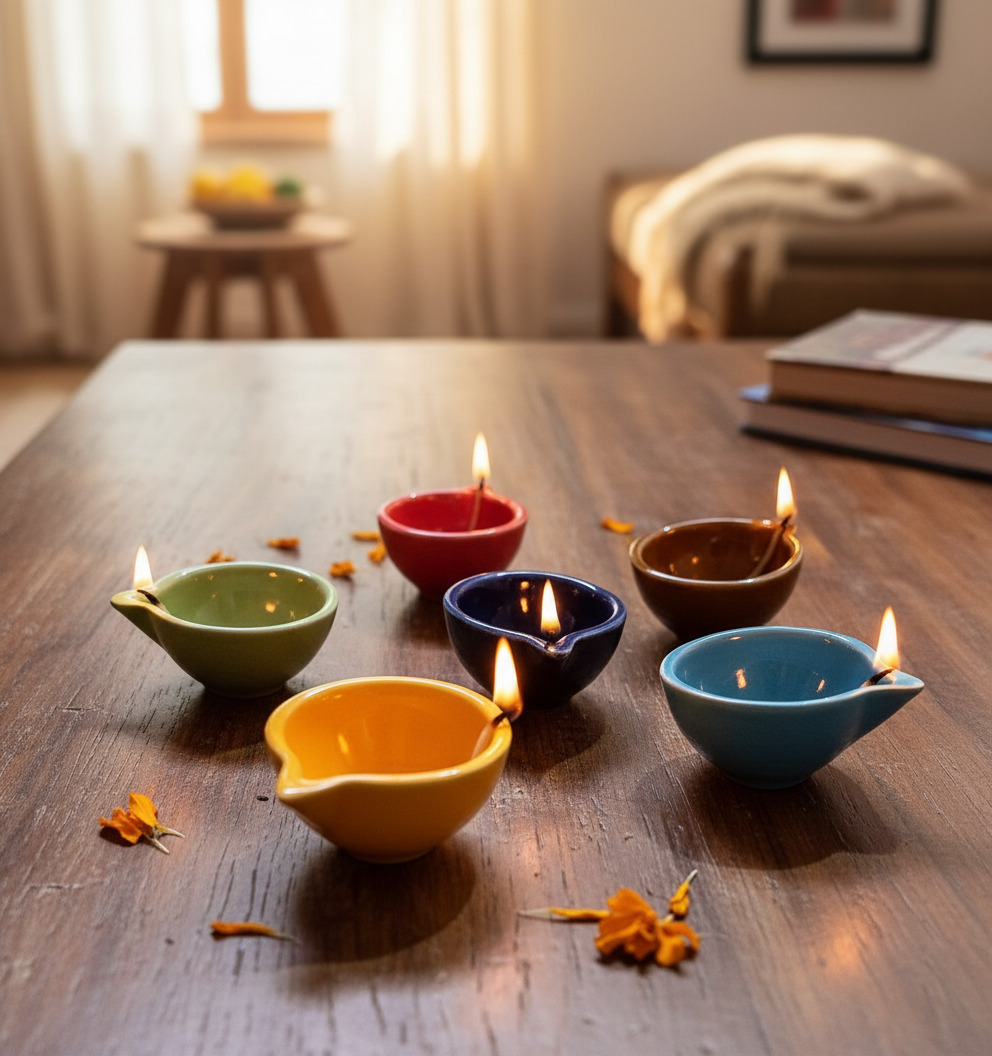
Balconies are the most photographed corner of Diwali and the most exposed to wind. Use lamps with some protection — hurricane candle holders, ceramic diyas with a heavier base, or tealights inside glass — and fairy lights along the railing for the base layer. A set of glazed ceramic diyas, such as the Handcrafted Multi-Color Ceramic Diya Set (₹549 for 6), gives daytime colour on the ledge and evening light without worrying about clay soaking up oil. Put a small ceramic planter with marigolds at each end to frame the railing; see ceramic planters and vases.
Clay vs brass vs ceramic diyas: which should I buy?
Each material has a job. Buy clay for volume, brass for longevity and ceramic for colour.
| Clay (mitti) diya | Brass diya | Glazed ceramic diya | |
|---|---|---|---|
| Look | Earthy, traditional, matte | Warm gold, reflects flame | Coloured, hand-painted, glossy |
| Burn time | Short; wick and oil soak into clay | Long and steady; multi-wick options | Medium; glaze holds oil well |
| Wind | Light — tips easily outdoors | Heavy and stable | Fairly stable |
| Lifespan | One or two festivals | Decades; heirloom | Many years if not dropped |
| Care | Soak before first use; discard when oily | Lemon and salt clean; dry fully | Wipe with soap; dishwasher-safe glaze |
| Typical cost | Very low per piece | ₹349–₹2,499 at umsang | ₹549 for a set of 6 |
| Best for | Rangoli borders, ledges, quantity | Pooja corner, entrance, centrepieces | Dining table, balcony, colour accents |
Can I reuse Diwali decor year after year?
Yes, and it is the most sensible way to decorate. Divide your budget into things that last and things that perish. Brass urlis, brass and ceramic diyas, hurricane holders and a good dinner set come out every November for twenty years; marigolds, clay diyas and rangoli powder are bought fresh. After the festival, clean brass with lemon and salt (our natural brass-cleaning guide covers it), dry every piece thoroughly, wrap it in soft cotton and store it in a dry cupboard. Hand-wash ceramic diyas and pack them with paper between each one.
Buy the brass once. Buy the marigolds every year.
When should I order so everything arrives before Dhanteras?
Work backwards from Friday, 6 November. umsang delivers in 3–5 business days to metros and 5–7 business days elsewhere, and courier networks are at their busiest in early November. Ordering by the last week of October is comfortable; ordering in the first days of November is possible but tighter. Shipping is free on orders above ₹5,000 and a flat ₹99 below that, and Cash on Delivery is available if you prefer to pay at the door.
- Now to mid-October: decide the palette, measure the entrance and table, choose the urli and lamps.
- Last week of October: place the order for brass, ceramic and lamps from Diwali decor.
- Early November: buy clay diyas, oil, wicks and rangoli colours locally.
- 5–6 November: deep-clean, hang torans, set up the urli; fresh flowers on the morning of Dhanteras.
- 8 November, Diwali: light the lamps at dusk, pooja corner first.
Everything above — urlis, multi-wick lamps, ceramic diyas and candle holders — is gathered in our Diwali decor and diyas collection, made by Indian artisans and built to be lit again next year.
Frequently Asked Questions
When is Diwali in 2026?
Diwali (Lakshmi Puja) falls on Sunday, 8 November 2026. Dhanteras is on Friday, 6 November, and the five-day festival runs through Bhai Dooj in the days after. Because it lands on a weekend, most homes decorate on the Friday and Saturday before.
How do I decorate a brass urli for Diwali?
Fill the urli two-thirds with clean water, float a handful of marigold or rose petals (or whole small flowers), and add two to four floating tealights or small brass diyas once the light fades. Change the water daily so it stays fresh through the festive week.
Which diyas are best for Diwali — clay, brass or ceramic?
Use all three, in different roles. Clay diyas are inexpensive and traditional for lining ledges and rangoli; brass diyas are the long-life investment for the pooja corner and entrance and are reused for decades; glazed ceramic diyas add colour to tables and balconies and wipe clean easily.
When should I order Diwali decor to be sure it arrives in time?
Order by the last week of October. Delivery from umsang takes 3–5 business days to metro cities and 5–7 business days elsewhere, and courier networks slow down in the festive week itself. Ordering late October leaves comfortable margin for Dhanteras on 6 November.
How can I make my Diwali decor reusable every year?
Invest in the pieces that do not perish — brass urlis, brass diyas, ceramic diyas, hurricane candle holders and a good ceramic dinner set — and spend the disposable part of your budget on fresh flowers, clay diyas and rangoli powder. Clean brass with lemon and salt after the festival, dry it fully and store it wrapped in cloth.
The umsang Studio
Handcrafted home decor, made by Indian artisans.