Copper is a pure element; brass is copper mixed with zinc; bronze is copper mixed with tin. That single difference explains almost everything else — copper is reddish and best for water, brass is yellow-gold, rings brightly and suits decor, lamps and everyday idols, and bronze is darker, heavier and the classic metal for cast sculpture and bells. Here is how the three compare on colour, weight, sound, tarnish, care and price, and how to tell them apart at home before you buy.
What are brass, bronze and copper actually made of?
Copper is an element (Cu on the periodic table). What you buy as “pure copper” is typically 99% or more copper — a soft, malleable, highly conductive metal with a warm pink-red colour that oxidises to brown and eventually green.
Brass is copper alloyed with zinc, usually somewhere between 60–70% copper and 30–40% zinc, sometimes with small amounts of other metals. Zinc lightens the colour to yellow-gold, makes the metal harder and easier to machine, and gives it the clear ring you hear from a temple bell or a brass diya set down on stone.
Bronze is copper alloyed with tin, typically around 88% copper and 12% tin, often with a little zinc or lead in traditional casting alloys. Tin makes the metal harder and denser than brass, gives it a deep red-brown colour, and makes it excellent for casting fine detail — which is why it has been the sculptor’s metal for thousands of years.
How do they differ in colour, weight and sound?
Colour is the first tell. Freshly polished copper is unmistakably pink-red. Brass is yellow — anywhere from pale gold to a rich, almost orange gold depending on how much zinc it carries. Bronze sits between the two and darker: a red-brown that quickly deepens to chocolate and, with age, to a greenish patina.
Weight is close across the three; all are dense metals, and bronze is usually the heaviest for its size, with copper next and brass slightly lighter. In the hand, a solid piece of any of the three feels substantial. A “brass” item that feels light for its size is almost always plated over a cheaper metal.
Sound separates them clearly. Tap a piece with a coin: brass rings with a clear, sustained note (which is why bells are brass or bronze); bronze rings deeper and longer still; copper gives a softer, shorter thud. This is a quick test in a shop.
Brass vs bronze vs copper: side-by-side
| Copper | Brass | Bronze | |
|---|---|---|---|
| Composition | Pure element (Cu) | Copper + zinc | Copper + tin |
| Colour (polished) | Pink-red | Yellow-gold | Red-brown |
| Colour (aged) | Brown, then green | Dull brown-gold | Dark brown to green |
| Hardness | Soft, dents easily | Medium-hard | Hard, durable |
| Sound when tapped | Soft, short | Clear ring | Deep, long ring |
| Tarnish speed | Fast | Moderate | Slow but permanent-looking |
| Magnetic? | No | No | No |
| Best for | Water bottles, jugs, kitchen | Diyas, urlis, decor, home idols | Cast sculpture, bells, temple idols |
| Care | Lemon and salt; dry fully | Lemon, vinegar-salt paste; polish | Mostly leave alone; gentle clean |
| Relative price | Moderate | Most affordable | Highest |
Which metal is right for each use?
Home decor
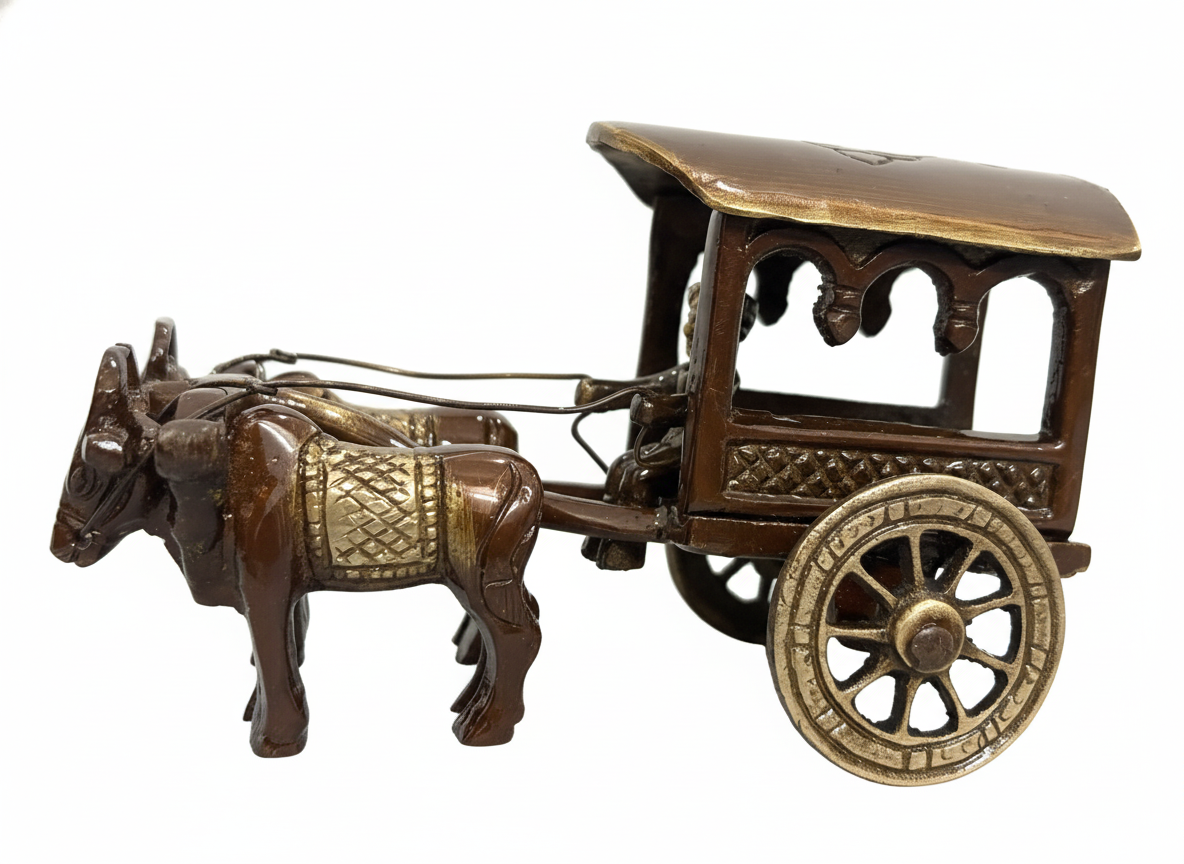
Brass wins for most decor. It is bright, holds fine engraving, resists dents better than copper and costs less than bronze. Urlis, figurines, decorative plates, lamps and candle holders are almost always brass, and it is the metal our brass home decor collection is built on — pieces like the Antique Brass Handcrafted Bullock Cart Figurine (₹4,299) or the Handcrafted Brass Swan Love Birds Figurine Pair (₹3,499) show how much detail brass takes. Copper decor is rarer and used where the pink tone is the point — a hammered vase, a tray. Bronze decor is usually sculpture.
Idols and pooja items
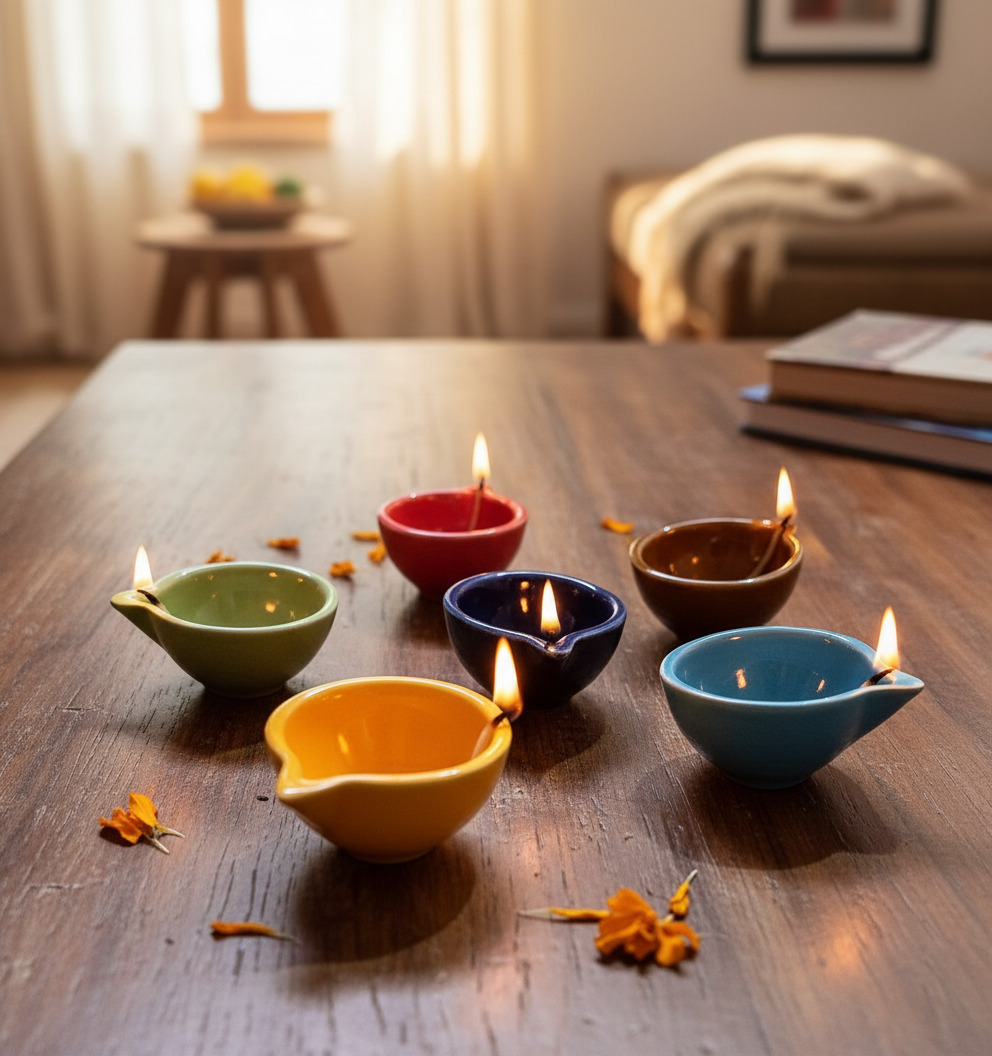
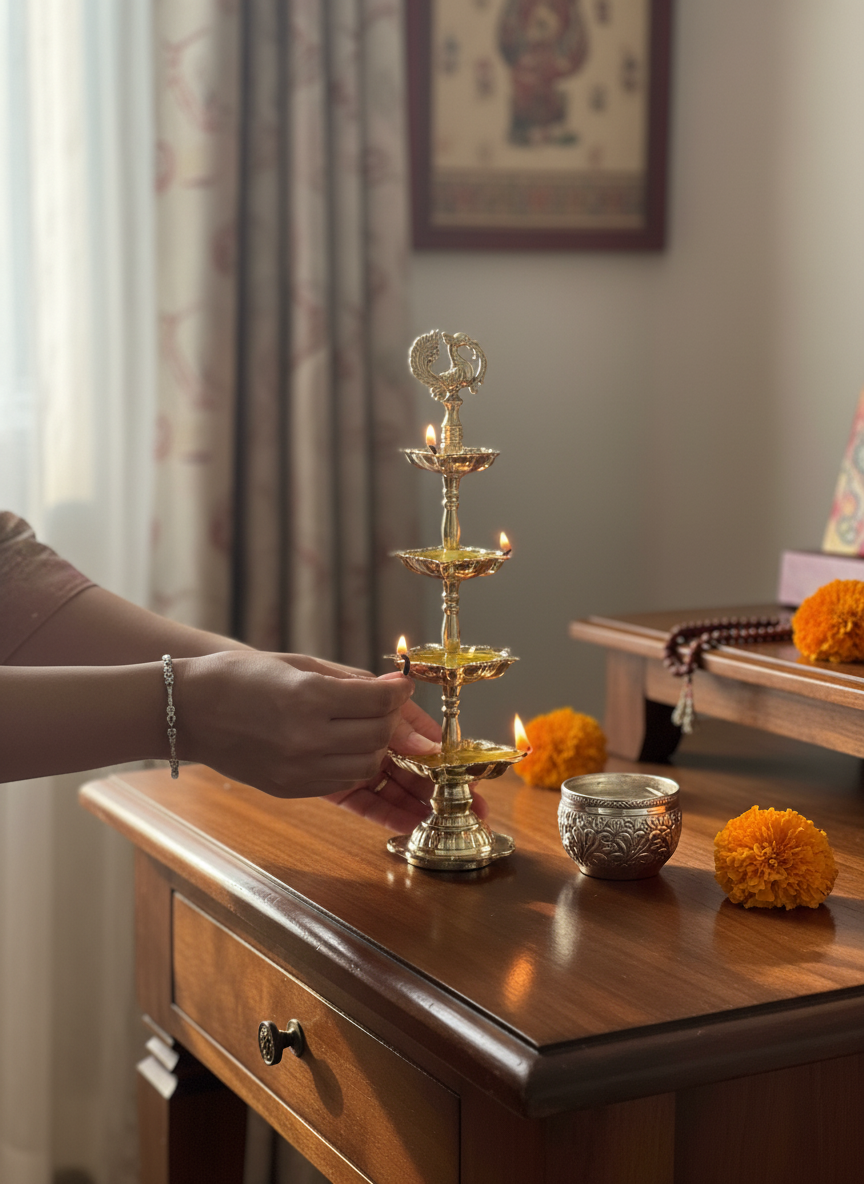
Both brass and bronze are traditional, and the choice is partly regional. South Indian temple bronzes cast by the lost-wax method are the pinnacle of the craft and are prized for their dark finish and detail. For a home mandir, brass is the everyday standard — brighter, lighter on the wallet, and easy to keep clean. Diyas, bells, kalash and thalis are overwhelmingly brass; browse brass oil lamps to see the range from a ₹349 lotus lamp to a ₹2,499 tiered peacock lamp.
Utensils and cooking
Traditional Indian kitchens used copper and brass vessels with a tin (kalai) lining, because bare copper and brass react with acidic food. Modern use is mostly serving and storage rather than cooking. Bronze (kansa) plates and glasses are a regional tradition, particularly for eating, and are usually left unlined.
Drinking water
Copper, clearly. It is the metal Ayurveda associates with stored water, it is a pure element, and a well-made bottle needs nothing else in it. A Handcrafted Engraved Copper Water Bottle (₹1,250) or a Handcrafted Mandala Print Black Copper Bottle (₹1,299) is the sensible daily choice; see the full copper water bottles collection. Good lead-free brass is fine for short-term use, but our detailed comparison of brass vs copper vs steel for drinking water explains why copper is the better everyday pick.
How do brass, bronze and copper tarnish — and how do I care for each?
All three darken because copper reacts with air, moisture and skin oils; the more copper in the metal, the faster it happens. Copper tarnishes quickest, brass moderately, bronze slowly but toward a patina most people keep. None of it is rust — these metals contain no iron — and none of it is damage.
- Copper: lemon and salt or tamarind, rinse, dry immediately. Clean bottles weekly.
- Brass: lemon and salt, or a salt-flour-vinegar paste; a soft polish for shine. Lacquered brass should only be wiped with a damp cloth — the lacquer is doing the protecting.
- Bronze: dust, and wipe with a barely damp cloth. Most owners leave the patina; if you do want to lift it, use lemon and salt gently and expect the dark finish to return over time.
Whichever metal, the two rules are the same: never the dishwasher, and never leave it wet.
How can I tell brass, bronze and copper apart at home?
Five quick checks, no tools beyond a magnet and a coin.
- Magnet. None of the three is magnetic. If a magnet sticks, the item is plated over iron or steel and is not solid brass, bronze or copper.
- Colour on a clean spot. Rub a hidden area with lemon and salt: pink-red is copper, yellow is brass, red-brown is bronze.
- Sound. Tap with a coin: clear ring means brass, deeper longer ring means bronze, a soft thud means copper.
- Weight for size. Solid pieces are heavy; a light piece is hollow or plated.
- Wear points. On plated items, edges and bases show a different metal underneath; on solid metal, wear just shows the same colour, slightly brighter.
For a fuller set of tests — including the scratch test and how plated items are marketed — read how to tell if brass is pure.
Same copper heart, three different metals — zinc makes it sing, tin makes it last, and on its own it holds your water.
Which should I buy?
Buy copper for anything that holds drinking water. Buy brass for lamps, urlis, decor and home idols — it gives the most beauty and durability per rupee, and it is the metal Indian artisans work most fluently. Choose bronze when you want a cast sculpture or heritage-style temple idol and are happy for it to age dark. At umsang we work in brass and copper; explore the brass decor range and copper bottles, or start from the full shop. Orders above ₹5,000 ship free; below that shipping is a flat ₹99, with Cash on Delivery available and delivery in 3–5 business days to metros, 5–7 elsewhere.
Frequently Asked Questions
What is the main difference between brass, bronze and copper?
Copper is a pure element with a reddish-pink colour. Brass is an alloy of copper and zinc, yellow-gold in colour. Bronze is an alloy of copper and tin, a deeper reddish-brown that ages to a dark, sometimes greenish patina. The zinc or tin changes the colour, hardness, sound and how the metal ages.
Which is better for idols — brass or bronze?
Both are traditional. Bronze is the classic casting metal for South Indian temple idols made by the lost-wax (Chola) method and takes fine detail with a deep, dark finish. Brass is more common for everyday home idols, is brighter, and costs less. For a home mandir, brass is the practical choice; for a heritage-style sculpture, bronze.
Which is best for drinking water — copper or brass?
Copper. It is the metal Ayurveda associates with stored water and it is a pure element, so there is no zinc or trace lead to think about. Good lead-free brass is safe for short-term use, but copper is the better daily choice for a bottle or jug.
How can I tell brass from copper at home?
Look at colour on a scratched or freshly cleaned spot: copper is pink-red, brass is yellow-gold, bronze is brown-red. Tap it: brass rings clearly, copper gives a duller note. Neither brass, bronze nor copper is magnetic, so a magnet sticking means plating over steel or iron, not solid metal.
Why does bronze turn green?
Bronze and copper develop a green patina (verdigris) when exposed to moisture and air over years — the same process that greens old statues and temple bells. It is a stable surface layer, not damage. On indoor decor it is slow and can be cleaned off with lemon and salt if you prefer the original colour.
The umsang Studio
Handcrafted home decor, made by Indian artisans.