As per Vastu, the most auspicious place for a pooja room or mandir is the northeast corner of the home — the Ishan kona. Idols should ideally face east or west, set a few inches from the wall and never directly facing each other, with the space arranged so you face east or north while praying. These are traditional guidelines meant to encourage calm and focus, not rigid rules — here's how to apply them sensibly in a real home.
The best direction for a pooja room
The northeast (Ishan) corner is consistently recommended as the ideal spot for the mandir. In Vastu it's associated with clarity, light, and positive energy. If a northeast room or corner isn't available, north and east are the next-best choices. Mandir doors and windows are best oriented to open toward the north or east.
Which way should the idols face?
Position your idols so they face east or west, and arrange the area so that you, the devotee, face east or north during prayer. Keep idols slightly raised on a platform or shelf rather than directly on the floor, and a few inches away from the wall so air and light can move around them.
Idol placement rules
- Keep idols at least a few inches from the wall and slightly elevated.
- If you have multiple idols, arrange them so they don't directly face one another.
- Don't place idols facing directly into the main door of the room.
- Avoid chipped or broken idols and images of violence in the pooja space.
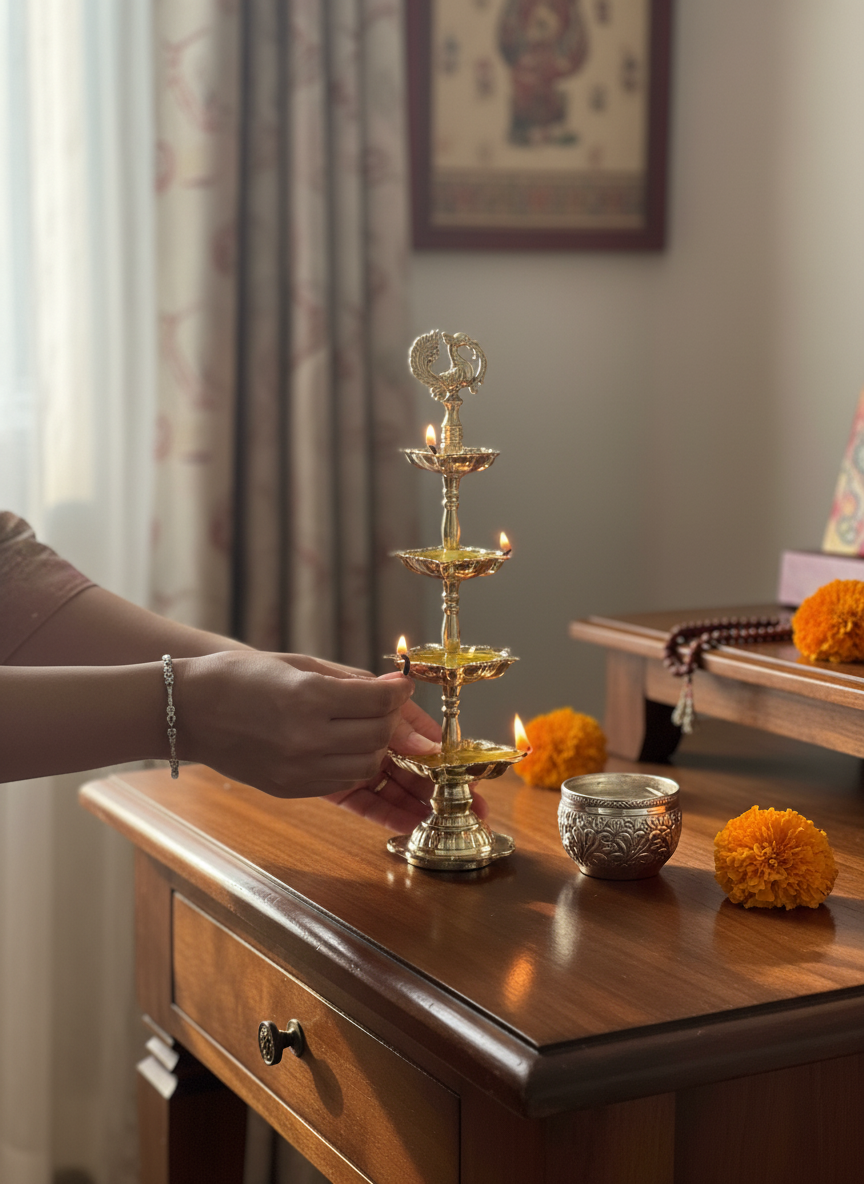
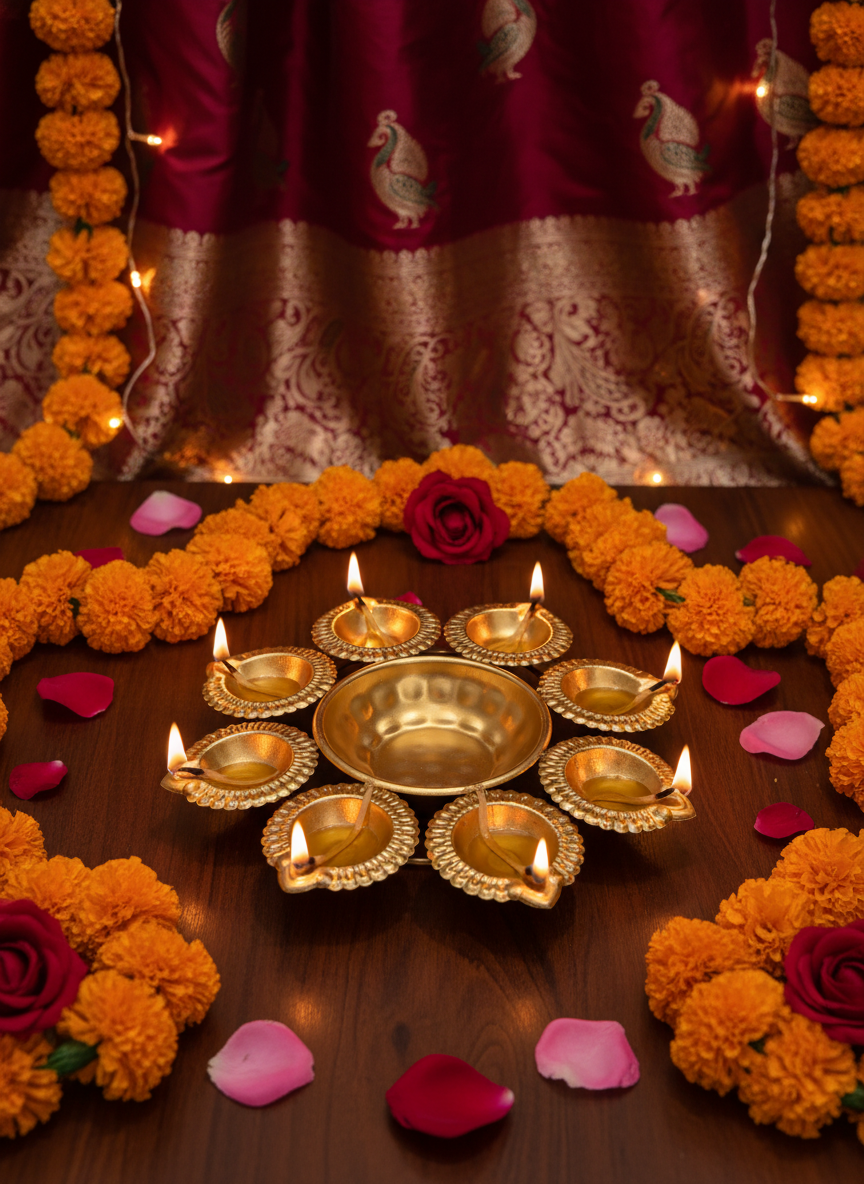
- Keep a lamp or brass diya on the east side; light it daily if you can.
Directions and spots to avoid
- The south direction for the mandir.
- Under a staircase, or against a bathroom wall.
- Inside a bedroom if it can be helped (screen it if unavoidable).
- Cluttered, dusty corners — the pooja space should stay clean and uncrowded.
A simple setup for apartments
Short on space? Dedicate the northeast corner of your living or dining area to a small wall-mounted or tabletop mandir. Keep it minimal and clutter-free, add a brass lamp and a few well-chosen pieces of handcrafted brass decor, and you have a serene, Vastu-friendly corner without needing a whole room. For more ideas, see our guide to the pooja room reimagined for modern homes.
Frequently Asked Questions
Which direction is best for a pooja room as per Vastu?
The northeast corner (Ishan kona) is considered the most auspicious place for a pooja room or mandir. If the northeast is not possible, the north or east are acceptable alternatives. Avoid placing the mandir in the south, under a staircase, or sharing a wall with a bathroom.
Which way should the idols face in a pooja room?
Idols are traditionally positioned to face east or west, and the space arranged so that you face east or north while praying. Place idols a few inches away from the wall, and if you have several, arrange them so they do not directly face each other.
Can a pooja room be in the bedroom or kitchen?
A dedicated room or the northeast corner of the living area is ideal. If you must place it in a bedroom (common in apartments), keep it in the northeast corner and screen it with a curtain or shutter when sleeping. Avoid placing the mandir directly inside a bathroom or under stairs.
Which direction should I face while praying?
Facing east or north while praying is considered most auspicious in Vastu. East is associated with the rising sun and new beginnings; north with prosperity.
The umsang Studio
Handcrafted home decor, made by Indian artisans.