The best Diwali diyas balance tradition with longevity. Brass oil lamps are reusable heirlooms and the most giftable; traditional clay diyas are affordable and classic for lighting in large numbers; and decorative multi-wick lamps — like peacock and lotus designs — make a glowing centerpiece. Here's how to choose the right ones for your home.
The main types of diya
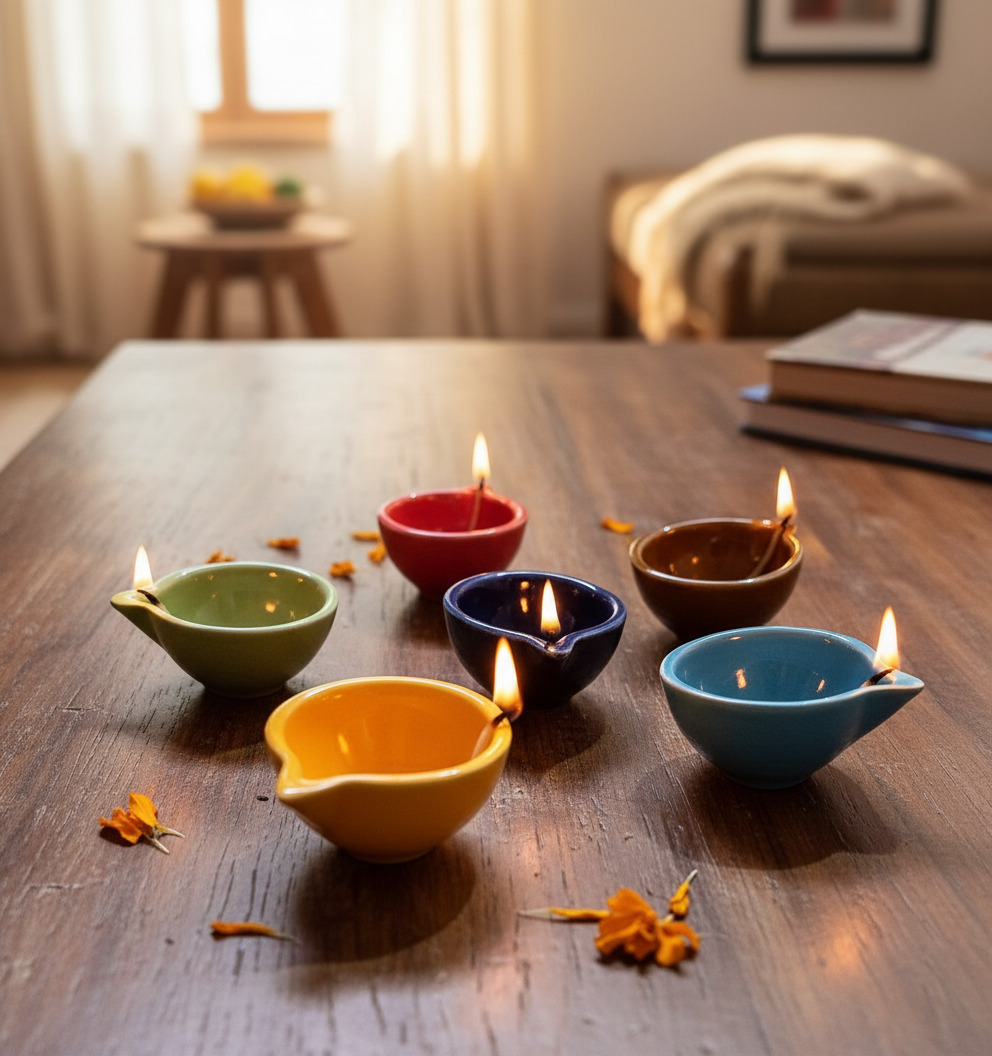
Traditional clay (terracotta) diyas
Inexpensive, classic, and biodegradable — perfect for lighting in large numbers along balconies, walls, and entrances. They're single-use friendly and the most traditional look.
Brass oil lamps
Reusable, weighty, and beautiful. Brass diyas develop a warm patina over time and last for generations, which makes them the natural choice for the main altar and for gifting.
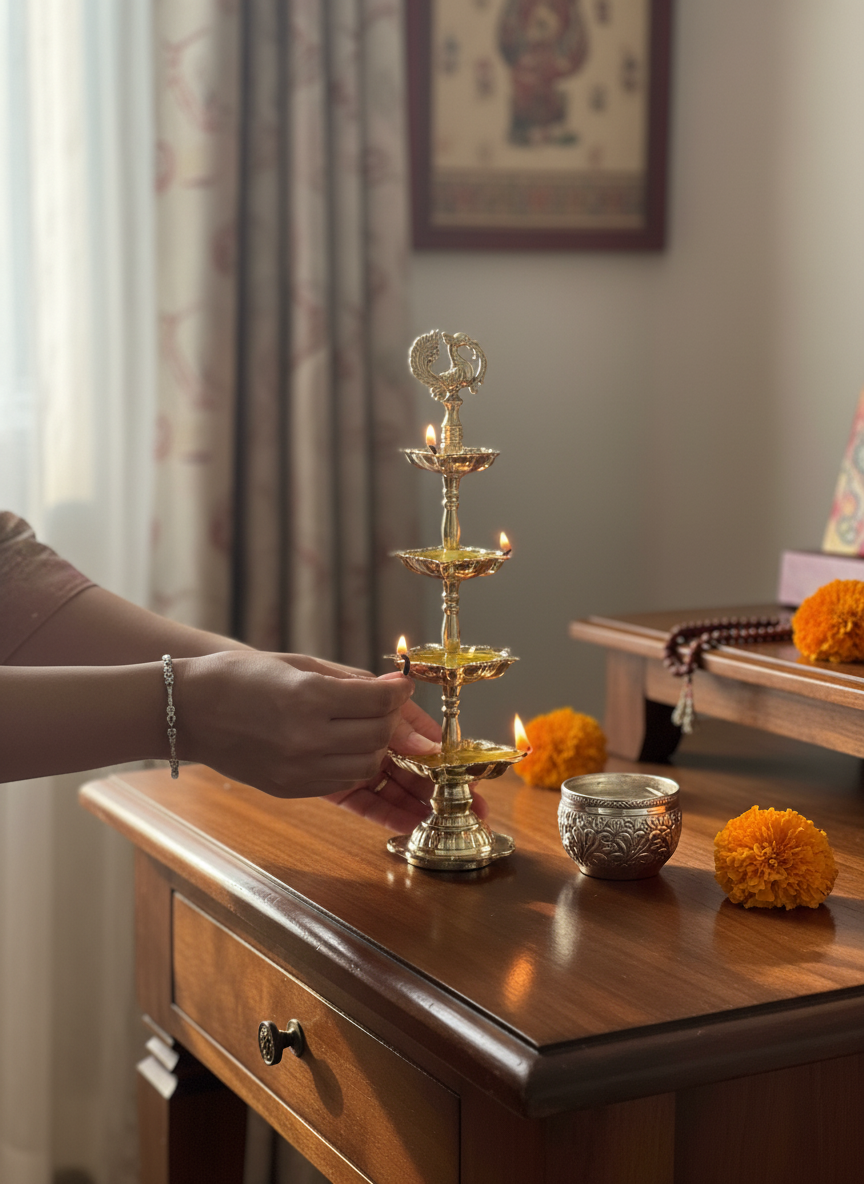
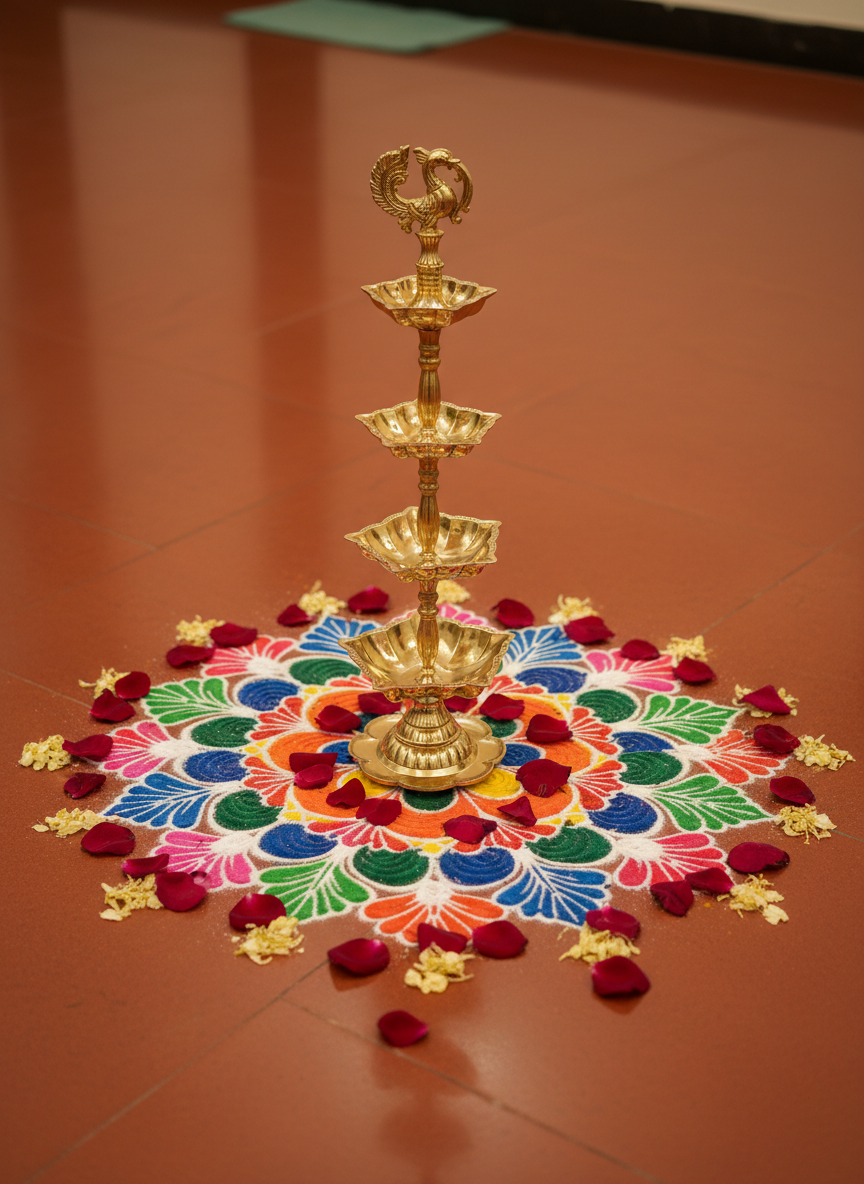
Decorative multi-wick lamps
Peacock lamps, lotus diyas, and multi-tier standing lamps (kuthu vilakku) are statement pieces — a single one can anchor your whole Diwali display with a dramatic, multi-flame glow.
How to choose
- For lining the home: many small clay or single-wick diyas.
- For the altar / main display: one decorative brass multi-wick lamp.
- For gifting: a brass diya or lamp — lasting and auspicious (see our housewarming gift guide).
- For everyday pooja: a simple single-wick brass diya you can clean and reuse.
Why brass diyas are worth it
A clay diya lasts a night; a well-made brass diya lasts a lifetime. Brass holds the flame steadily, looks richer as it ages, and carries the kind of craftsmanship you can pass down. For placement guidance, our pooja room Vastu guide covers where to keep your lamp.
Caring for brass diyas
After use, wipe away oil and soot. Clean periodically with lemon and salt or tamarind to bring back the shine — or simply let a patina form. Always dry fully, and never use harsh chemicals or steel wool. Our complete brass care guide has the step-by-step. Ready to light up? Explore our Diwali collection.
Frequently Asked Questions
Which diya is best for Diwali?
For a lasting, giftable choice, brass oil lamps (diyas) are best — they're reusable, develop a beautiful patina, and become heirlooms. Traditional clay diyas are the most affordable and classic for lighting up in large numbers, while decorative multi-wick brass lamps (peacock or lotus) make a striking centerpiece.
How many wicks should a Diwali diya have?
A single-wick diya is the everyday classic. Multi-wick lamps — 5, 7, or even multi-tier peacock lamps — are used as festive centerpieces and for special pujas; the more wicks, the grander the glow. Choose by the role: many small single diyas to line the home, plus one statement multi-wick lamp.
Are brass diyas better than clay diyas?
They serve different purposes. Clay diyas are inexpensive, traditional, and perfect for lighting in large numbers (and they're biodegradable). Brass diyas cost more but last a lifetime, look richer, and make excellent gifts. Many homes use both — clay for volume, brass for the main altar and gifting.
How do I care for a brass diya?
Wipe off oil and soot after use, and clean periodically with lemon and salt or tamarind to restore shine — or let it develop a patina. Dry it fully and avoid harsh chemicals or steel wool. See our brass care guide for the full method.
The umsang Studio
Handcrafted home decor, made by Indian artisans.