Brass is one of the most forgiving metals you can own — it ages beautifully, it cleans up easily, and even neglected pieces can be brought back to life. But it does need the right care, and the wrong care can damage it permanently. This is the complete guide to keeping any brass piece in your home looking the way you want it to.
First — figure out what kind of brass you have
Before you clean anything, identify the finish. There are two main types you'll encounter at home:
Lacquered (sealed) brass
Most modern brass — especially decorative pieces — comes with a clear protective lacquer. The brass beneath stays shiny because it's sealed off from air. Clean these only with a soft damp cloth. Never use polish or abrasives — they'll damage the lacquer and create patchy spots that are very hard to fix.
Unlacquered (raw) brass
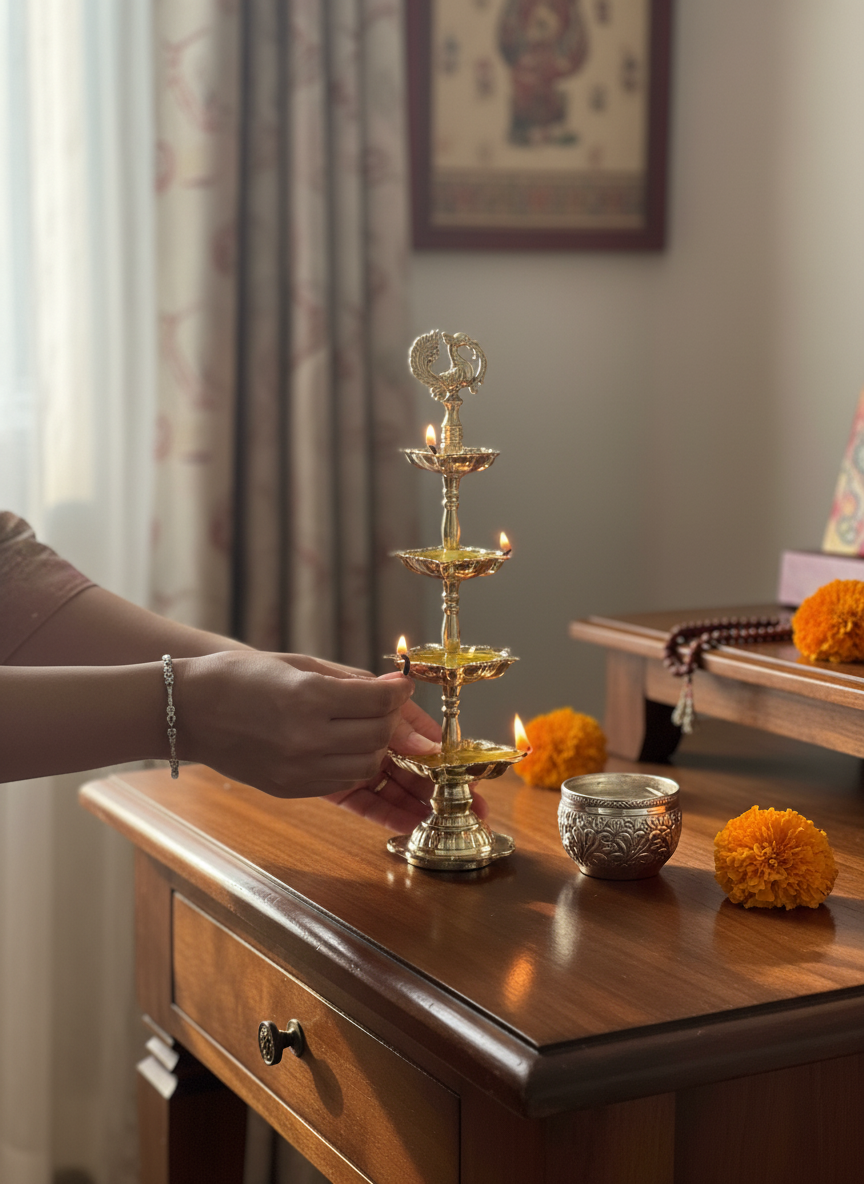
Traditional handcrafted brass — temple lamps, antique pieces, hand-finished decor — is usually unlacquered. This brass will tarnish over time, developing darker tones (this is patina, and many people love it). It also takes polish beautifully when you want it to shine.
Quick test: drop a small amount of lemon juice on an inconspicuous spot. If it bubbles or shines the brass, it's unlacquered. If nothing happens, it's lacquered.
Daily care for both types
- Dust gently with a microfibre cloth once a week.
- Avoid placing brass in direct contact with food unless the piece is specifically food-safe (check the listing).
- Keep brass away from harsh cleaning chemicals — bleach, ammonia, and most commercial bathroom cleaners will damage both lacquer and raw brass.
- If a brass piece gets wet, dry it immediately. Standing water leaves marks.
How to clean unlacquered brass that has tarnished
For traditional brass that's gone dark and you want to bring back to shine, you have three options — from gentlest to most aggressive:
Method 1: Lemon and salt (gentle, daily-safe)
Cut a lemon in half, dip the cut side in salt, and rub it over the brass. Rinse with warm water and dry immediately with a soft cloth. Works for light tarnish. Won't strip a deep patina.
Method 2: Tamarind paste (traditional Indian method)
Soak tamarind in warm water for 20 minutes, mash it into a paste, apply with a soft cloth in circular motions, then rinse and dry. This is the method used in temples and old homes for generations — it's gentle but effective.
Method 3: Commercial brass polish (for deep tarnish)
Brasso or Pitambari work well for stubborn tarnish. Apply a small amount with a soft cloth, polish in circles, then buff with a clean dry cloth. Use sparingly — they're abrasive and over-polishing gradually wears the brass thin.
How to preserve the patina (don't polish)
Many of the most beautiful brass pieces — antique brass diyas, family kalash, hand-finished sculptures — look better with patina than without. If that's the look you want:
- Don't polish.
- Dust regularly to prevent oils and dirt from making the patina uneven.
- If you must wash it, use only warm water and a soft cloth — no soap, no polish, no salt.
- Once a year, you can apply a thin coat of paste wax (the kind used for furniture) to seal in the patina and prevent further darkening.
Common mistakes to avoid
- Don't put brass in the dishwasher. The heat and detergent will destroy lacquer and pit the metal.
- Don't leave brass soaking in water. Especially with citrus or vinegar — it'll etch the surface.
- Don't use steel wool or rough scrubbers. They scratch brass permanently.
- Don't mix polishing methods. Tamarind paste right after lemon and salt can react badly.
When to take it to a professional
Some brass pieces — especially old family heirlooms, hand-engraved temple items, or pieces with intricate detail — are worth taking to a professional brass cleaner if they're heavily tarnished. The cost is usually low (₹200-500), and they have ultrasonic cleaners and the right chemistry to restore details that home methods can't reach.
The takeaway
Brass rewards a little attention. Dust it weekly, don't drown it in water, choose your finish (shiny or patina'd) and stick with it, and your pieces will outlast you. We've seen brass decor that's 100 years old and still looks better than something you'd buy new — that's the point of buying handcrafted in the first place.
The umsang Studio
Handcrafted home decor, made by Indian artisans.