Patina is the natural darkening that forms on brass and copper as they age and react with air — a thin, harmless surface layer that many people find beautiful. It's also a quiet sign of authenticity: solid, unlacquered metal patinas, while plated or sealed pieces don't. Whether to keep it or polish it away is purely a matter of taste.
What is patina, exactly?
As brass and copper meet air and moisture, the surface slowly oxidises and deepens in tone — from bright gold toward amber, brown, and eventually rich, antique darkness. That evolving layer is the patina. It sits on top of perfectly sound metal and, far from being damage, often protects the metal underneath.
Patina vs tarnish vs verdigris
- Patina / tarnish — the natural ageing. Harmless and often desirable; the only difference is whether you see it as character or as something to clean.
- Verdigris — the green or blue-green deposit that forms when brass or copper meets acids. This one you should clean off, especially on anything used with food or water.
Should you remove it?
There's no right answer — only preference:
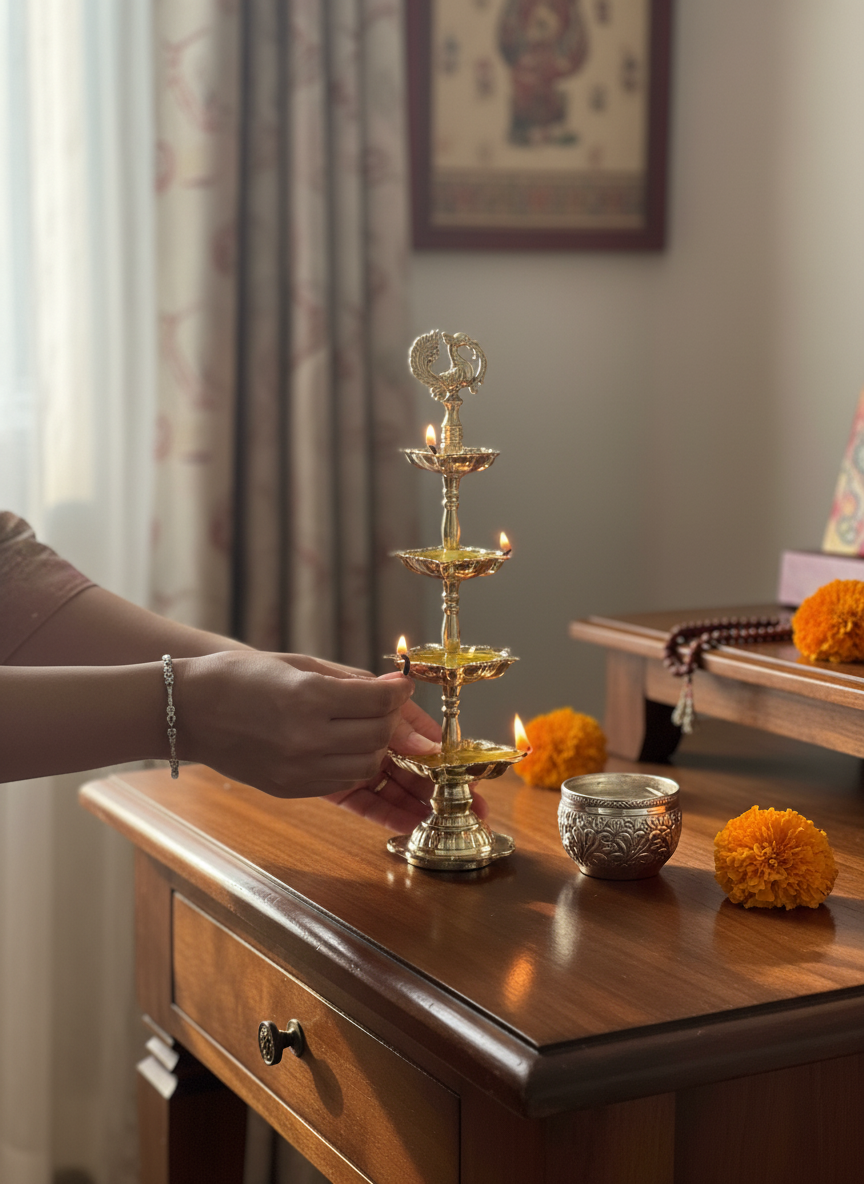
- Keep the patina for antique warmth and character — ideal for temple lamps, traditional pieces, and heirloom brass decor.
- Remove it for a bright, polished, formal look — and know it'll gently return over time.
How to keep (and protect) a patina
- Dust only — don't polish.
- Keep the piece dry; wipe off any water promptly.
- Once a year, a thin coat of paste wax helps lock in the look.
- Avoid acids, which create patchy verdigris instead of an even patina.
How to remove a patina for shine
Lemon and salt, tamarind, or a dedicated brass polish will lift the patina and restore the gleam — rinse and dry fully afterwards. Our brass care guide has the full method, and why brass tarnishes explains how to slow it returning.
Frequently Asked Questions
What is patina on brass?
Patina is the natural darkening that forms on brass and copper as the metal reacts with air and moisture over time. It is a thin, harmless surface layer — often warm and antique-looking — and a good sign that the piece is solid metal rather than lacquered or plated.
Should I remove patina from brass?
It is entirely your choice — patina is aesthetic, not harmful. Keep it for an aged, antique, heirloom look (popular for temple lamps and traditional decor), or polish it off for a bright, formal shine. The one exception is green verdigris on items used with food or water, which should be cleaned.
Is patina the same as tarnish?
Essentially yes — both describe the natural surface change as brass or copper ages. "Tarnish" tends to be used negatively (something to clean) and "patina" positively (character to keep), but they are the same underlying process.
Does patina protect the metal?
Yes, to a degree. The patina layer can actually help shield the metal beneath from further reaction, which is one reason antique brass and copper survive so long. It is protective, not destructive.
The umsang Studio
Handcrafted home decor, made by Indian artisans.