For a long time, the pooja room in Indian homes followed a fixed visual code: ornate wood, gold-coloured plastic, fabric drapery, fluorescent tubelights. It worked — but it never quite matched the rest of how modern Indian homes are designed. The good news is, that's changed. A pooja space can now feel completely contemporary while remaining deeply traditional in spirit. Here's how to reimagine yours.
Less is more — a single shelf can be enough
The most beautiful modern pooja spaces aren't rooms at all — they're a single floating shelf, a corner alcove, a section of a console table. The size doesn't determine how sacred the space feels. What determines that is what's on it, and how carefully it's been chosen.
Start with a single deity or symbol you want to centre the space around. One brass Ganesha. One Lakshmi figurine. One om symbol. Don't crowd the shelf with five small figures competing for attention — the eye won't know where to rest, and the space will feel cluttered rather than peaceful.
Material matters more than ornamentation
The shift in modern pooja design is from "decorated" to "honest materials." Solid brass, raw copper, hand-thrown ceramic, untreated wood. These materials carry presence on their own — they don't need to be gilded or carved to feel meaningful.
A simple handcrafted brass figurine in matte finish, sitting on a stone slab, can feel more devotional than the most ornate gold-plated piece. The patina that brass and copper develop over years of use becomes part of the spiritual character of the space — your pooja grows with you.
Light it properly
Lighting is what separates a forgettable pooja shelf from one that feels like a sanctuary. Three principles:
One — natural light first. If you have any choice in placement, position the shelf where morning light hits it. Even ten minutes of direct sun in the morning transforms how a brass diya catches the light.
Two — warm artificial light only. Skip the bright white LEDs. A small warm-white spotlight or a single hanging filament bulb at 2700K casts the kind of glow that makes brass and copper come alive. Cool light kills the warmth of these metals instantly.
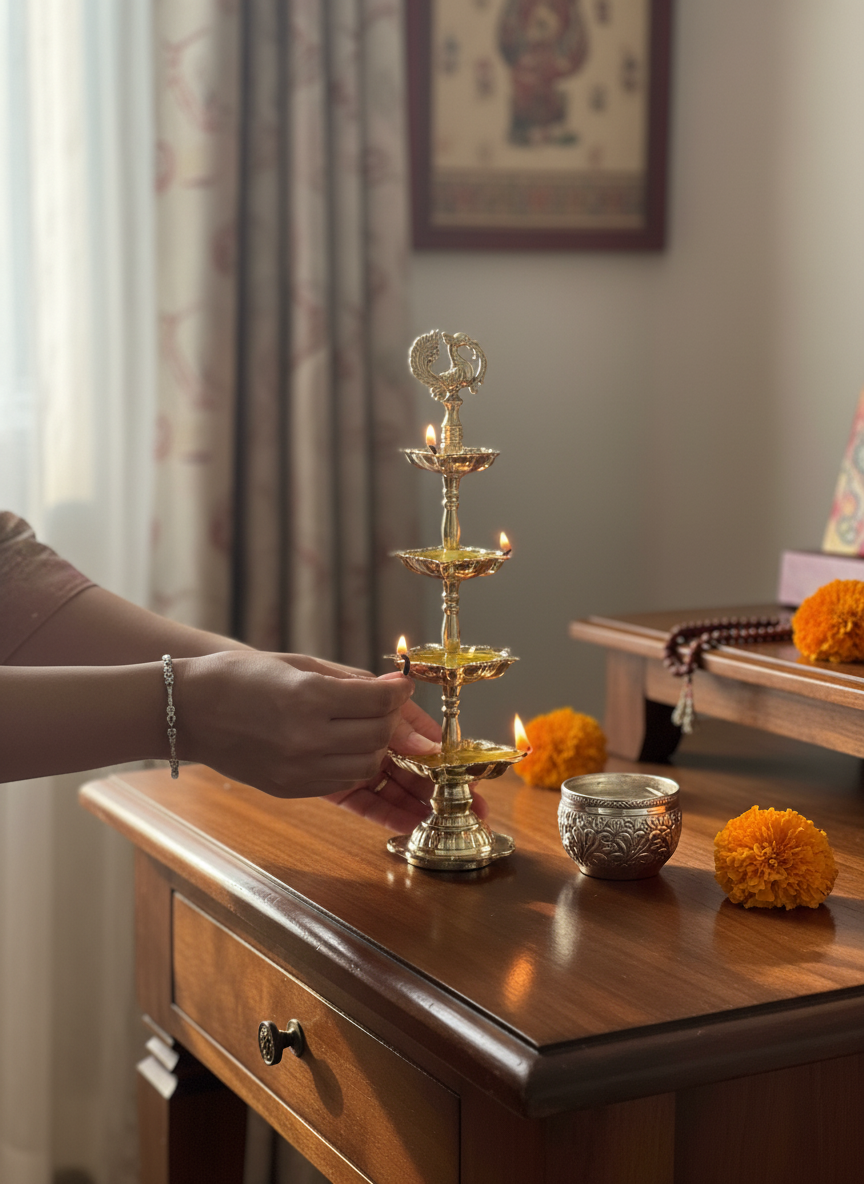
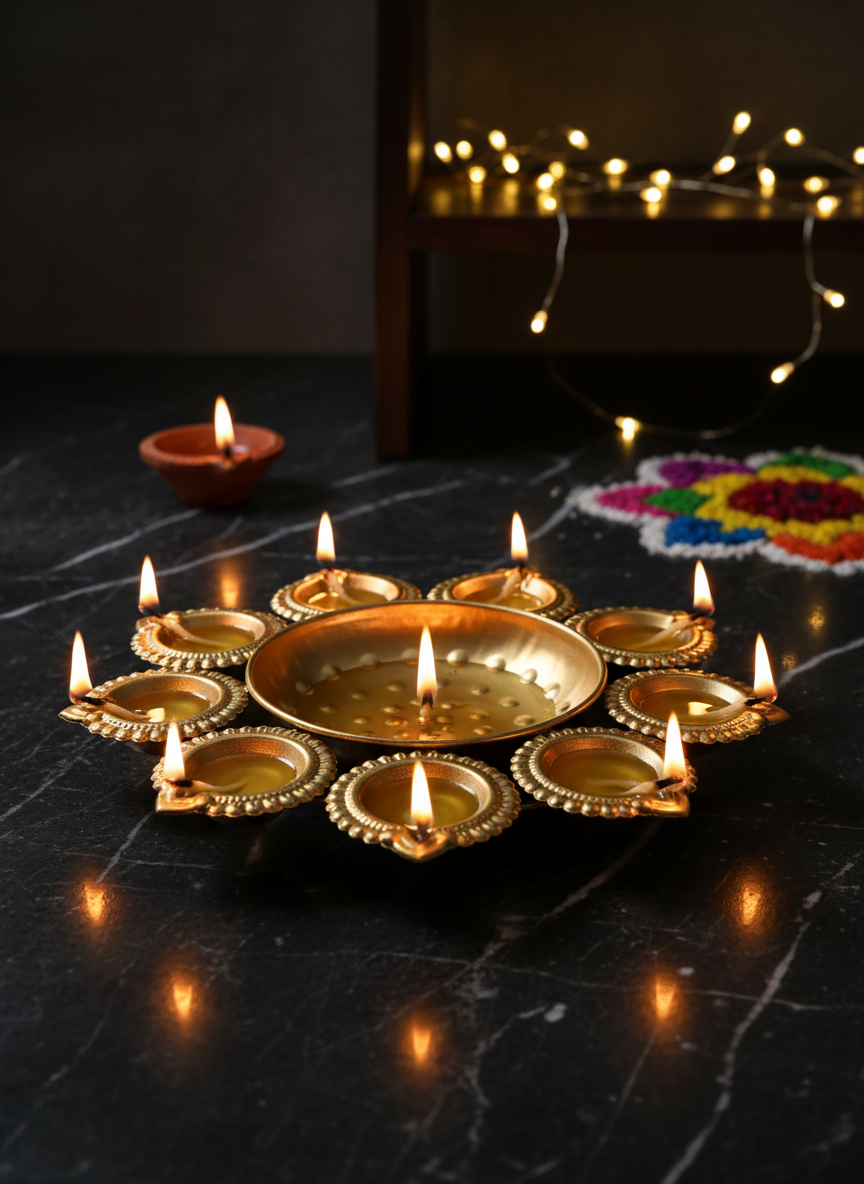
Three — keep an oil lamp lit at least once a day. A brass oil lamp or diya doesn't need to be lit constantly. But once a day — morning or evening — fill it with mustard or sesame oil and light it. Even five minutes changes the room's energy in a way no electric light can replicate.
Anchor with one beautiful container
Every pooja shelf needs a vessel — for water, for flowers, for prasad. Modern pooja design often centres on a single beautifully crafted container: a hand-thrown ceramic urli for floating flowers, a copper kalash for water, a small brass bowl for offerings. Pick one as the visual anchor and let everything else around it be quieter.
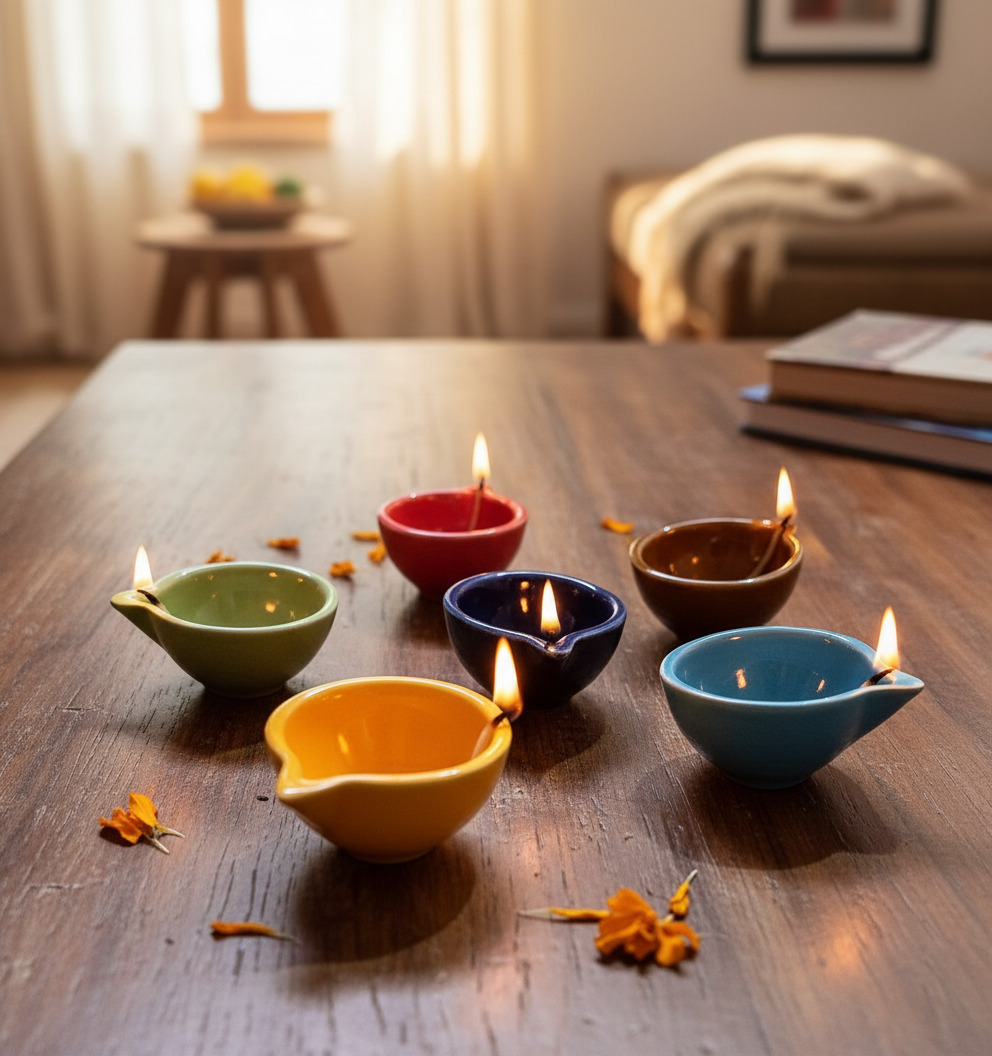
Handcrafted ceramic bowls work especially well in this role — they're substantial enough to feel grounded, but their colour and texture vary enough to feel personal. A pooja shelf with a single beautiful bowl reads as considered. One with five identical brass katoris reads as kit.
Make space for what's actually used
The most common mistake we see in pooja room photos is the absence of life. Real pooja shelves have agarbatti ash, oil rings on the base, a slightly burnt wick, perhaps a fresh marigold from this morning. That's what makes a sacred space feel sacred — it's used.
Design your shelf to accommodate that life. Have an easy way to clean it. Keep oil and matches accessible. Don't position it somewhere so visually precious that you're afraid to actually light a diya. The most beautiful pooja spaces are slightly weathered.
For tiny apartments — corners and consoles
If you don't have wall space, consider a tabletop pooja: a tray that contains everything (deity, lamp, bowl, agarbatti stand) and can be placed on any console or shelf. The tray defines the sacred boundary visually, and the whole setup can be moved or covered when needed. A copper or brass tray with three to four brass pieces on it can be more meaningful than a full-sized pooja room done badly.
The takeaway
Modern pooja design isn't about rejecting tradition — it's about honouring it more honestly. Fewer pieces. Better materials. More attention to light. The same daily practice. Done well, a contemporary pooja space carries the same weight as the most elaborate temple-style room, with none of the dated visual baggage. Browse our pooja room collection for handcrafted pieces designed with this sensibility in mind.
The umsang Studio
Handcrafted home decor, made by Indian artisans.