Yes — good-quality, lead-free brass is safe for serving and short-term water storage. Brass is an alloy of roughly 70% copper and 30% zinc, and the real risks come from two things: lead in cheap or older brass, and metal leaching when acidic liquids sit in it for a long time. For a dedicated daily drinking bottle, copper is the safer pick — but for decor, diyas, and serving, quality brass is both safe and beautiful.
What is brass, exactly?
Brass is a metal alloy — mostly copper, with zinc making up the rest, and sometimes small amounts of other metals. That composition is the whole story when it comes to safety. Copper and zinc are both essential nutrients in small amounts. The concern is when brass also contains lead (added historically to make it easier to machine), or when zinc leaches out through corrosion.
So — is brass safe for drinking water?
For short-term water storage and serving, good-quality lead-free brass is considered safe. The two things to watch for:
- Lead. Older and low-grade brass could contain meaningful lead — older plumbing fixtures contained up to about 8% lead, and water sitting overnight could pick it up. Modern, food-grade brass is made to be lead-free.
- Dezincification. Prolonged contact with water — especially acidic water — can selectively pull zinc out of brass, leaving white or greenish deposits. This is why you shouldn't store acidic drinks in brass for long stretches.
The practical takeaway: use brass from a maker who clearly states it is food-grade and lead-free, keep it clean, and don't let acidic liquids sit in it for hours.
What to look for in safe brass
- Food-grade, lead-free — the single most important thing. Buy from makers who state this.
- Right use for the finish. Lacquered brass is sealed and not meant for drinking vessels (the coating can chip); raw brass is traditional for water but needs regular cleaning.
- No long storage of acidic drinks — lemon water, buttermilk, tamarind, pickles. Use glass, stainless, or lined vessels for those.
- Clean regularly so tarnish and residue don't build up where water sits.
Brass vs copper for water
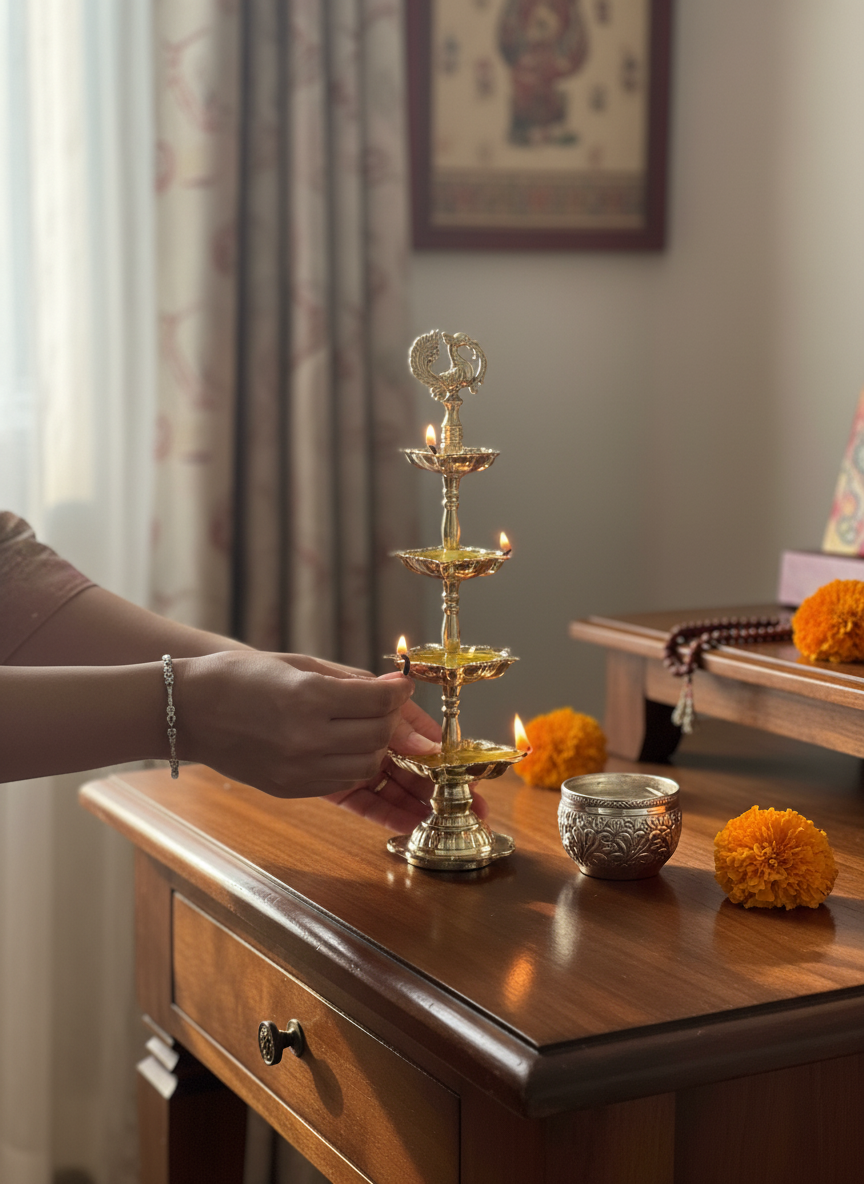
Copper has a mild, documented antibacterial effect and clearer, well-studied safe limits, which makes it the popular choice for a daily drinking-water bottle. Brass, meanwhile, is unmatched for warmth and character in handcrafted brass decor — diyas, urlis, lamps, and serveware. If you want the full side-by-side, read our brass vs copper vs steel comparison.
When brass shines — and when to choose copper
Choose brass for its glow and craftsmanship: pooja items, decorative bowls, table accents, and serveware used at mealtimes. Choose copper for a vessel you'll drink from every day — a dedicated copper water bottle stored the right way. They're not rivals so much as different tools, and most Indian homes happily keep both.
Frequently Asked Questions
Is it safe to store drinking water in a brass vessel?
Yes, for short periods in good-quality, lead-free brass. Storing plain water for a few hours is generally fine. Avoid leaving water (especially acidic drinks like lemon water or buttermilk) sitting for many hours, as that increases the chance of zinc or trace metals leaching.
Does brass contain lead?
It can. Brass is mainly copper and zinc, but some older or low-grade brass contains lead (older fixtures contained up to ~8% lead). Reputable, modern decor and serveware uses food-grade, lead-free brass. Always buy from a maker who states the brass is food-safe and lead-free.
Is brass safe for hot or acidic drinks?
Be cautious. Acidic foods and drinks (lemon, tamarind, buttermilk, pickles) react with brass over time and can cause metal to leach, sometimes leaving a green-blue residue (verdigris). For acidic or long-stored liquids, choose a lined, food-grade, or stainless option instead.
Brass or copper for drinking water?
For a dedicated daily drinking-water bottle, copper is the better choice — it has clearer safe limits and a mild antibacterial effect. Brass is excellent for decor, diyas, and serveware. Many homes keep both.
The umsang Studio
Handcrafted home decor, made by Indian artisans.